
Go Back

Go Back |
|
Sweden Self Catering holiday properties in and around Blekinge |
Soelvesborg/Blekinge Skaergard. Blekinge. Sweden From £loading... for 7 nights |

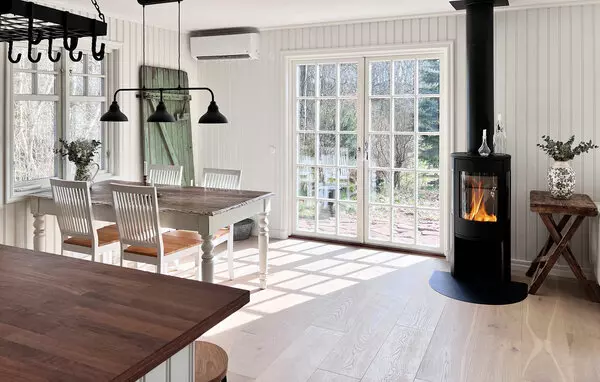


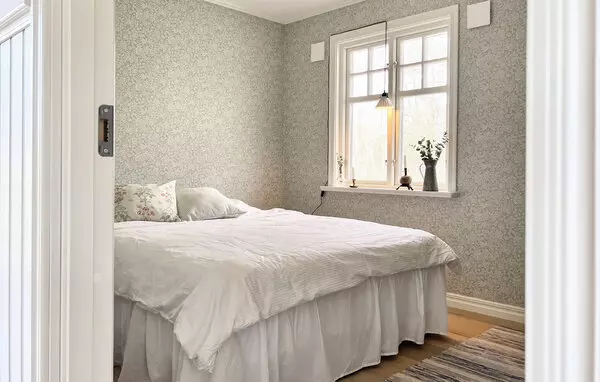

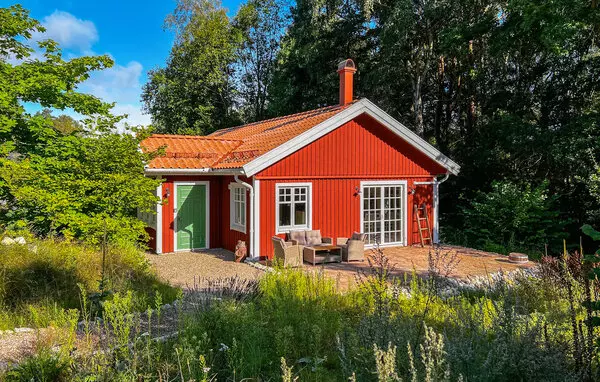
About Soelvesborg/Blekinge Skaergard. Your classic red Swedish holiday home on the Baltic coast welcomes you with a bright, stylish atmosphere. Start the day with a hearty breakfast in the dining area, which flows into the living room - ideal for family meals and sociable evenings. The open kitchen has plenty of space for cooking together. Relax on the cosy sofa in front of the TV and crackling fireplace. Outside, enjoy the fresh air on the natural grounds. The nearby coast promises fun days by the water, with an enchanting white sandy beach perfect for playing and swimming. Explore medieval Soelvesborg, walk across one of Europe's longest pedestrian bridges, or take a boat from Nogersund to the car-free island of Hanoe to visit the lighthouse and hike around the island.
Nearby attractions. Golf course: 4.2 km
Marked hiking trails: 100 m
Padel court: 6 km
French boules: 700 m
Tennis court: 7 km
Mini golf: 9 km
Swimming pool: 8 km
Outdoor pool: 9 km
Playground: 800 m
Boat rental: 9 km
Bicycles for rent: 6 km
Bowling: 14 km
Marked trail (5-10 km): 100 m
Mountain bike trails (5-10 km): 7 km
Marked cycling trail (5-10 km): 100 m
Jogging path: 6.9 km
Fitness centre: 6 km
Airport (MMX): 120 km
Nearest habitation: 15 m
Fishing: 500 m
Shopping: 6.5 km
Restaurant: 500 m
Nearest city (Soelvesborg): 6 km
Sea/sandy beach: 475 m
About Blekinge
The property, when we finally found it, sat tucked among pine trees on the edge of the Soelvesborg archipelago, a red wooden house with white trim that looked like it had been plucked from a children's illustration. I was still frantically patting my pockets when a woman emerged from next door, rubber boots on her feet and a mug of something steaming in her hand. She regarded us with the frank curiosity I would soon learn was standard Blekinge practice. "Lost?" she asked, in English that carried only the faintest Swedish lilt. "Keys," I managed, which I suppose counted as a sentence. She nodded slowly, took a deliberate sip, then produced a phone from her overalls pocket. "I call Ingemar," she said, as if this explained everything. It did not, but I was in no position to argue. Ingemar arrived twenty minutes later on a bicycle that appeared older than my father, wearing a flat cap and an expression of profound patience. He was, it transpired, the local handyman, key-holder, and unofficial mayor of this particular stretch of coastline. He did not hurry. He examined our booking confirmation with the gravity of a judge reviewing sentencing guidelines, then produced the keys from a tobacco tin in his jacket. "Norwegian family last week," he said, by way of explanation for nothing in particular. "Left the kayaks upside down. Rain got in. Very disappointed, Norwegians. Always expecting better weather." I apologised for the Norwegians, which felt diplomatically complex. Ingemar showed us round the property with the unhurried thoroughness of a man who had nowhere else to be, which he didn't. He demonstrated the wood-burning stove with theatrical intensity, patting it like a faithful hound. "She speaks to you," he said. "When she needs more wood, she whispers." I have never been less certain of anything, but I nodded solemnly. Our neighbour, whose name was Britt-Marie, appeared again as Ingemar was leaving, now armed with a Tupperware of what she called "fika" but which appeared to be an entire cinnamon bakery. She refused to leave until we had eaten three each, watching us with maternal suspicion. "You are too thin," she informed my partner, who has not been too thin since approximately 1987. "The walking here. You will need energy." She was not wrong about the walking. The archipelago trails wound through forests that smelled of resin and salt, past granite outcrops where fishermen had left offerings of empty spirit bottles and rusted hooks. Britt-Marie materialised on these paths with supernatural regularity, always carrying something: mushrooms she had foraged, berries she insisted we try, once a dead pike she had found "for the cats" that she showed us with the pride of a trophy hunter. On our third evening, we found Ingemar sitting on our decking uninvited, though not unwelcome, sharing a flask of something with a man introduced only as "the Dane," who lived on a boat in the next bay and spoke almost no Swedish or English. The three of them communicated in a pidgin of gestures, shared cigarettes, and explosive laughter at jokes I never understood. Ingemar translated one for us, something about a moose and a Volvo, which lost something in the telling. "The Dane," Ingemar said, with the weight of long explanation, "he thinks he is Viking." He paused to let this settle. "He is from Odense." The Dane grinned, unbothered, and offered me the flask. I declined. He looked at me with genuine pity. By the week's end, I had been instructed on proper berry-picking technique by Britt-Marie, taught three words of genuine Blekinge dialect by Ingemar (all apparently rude), and been given a hand-carved butter mould by the Dane, who pressed it into my hands without explanation and rowed away before I could protest. I still don't know what to do with it. It sits on my kitchen windowsill, slightly fungal-looking, a reminder of a place where strangers became unavoidable, then briefly precious, then simply part of the furniture of a week that felt longer than it was. We found our original keys, incidentally, in the hire car's glove compartment, wrapped in a Sainsbury's receipt from Gatwick. I have never told Ingemar. Some mysteries, I suspect, he prefers to keep. |
| Home - Articles - About - Contact |
| Our Destinations: Austria - Belgium - Croatia - Cyprus - Denmark - France - Germany - Greece - Italy - Montenegro - Netherlands - Norway - Poland - Portugal - Slovenia - Spain - Sweden |
| © 2026 UK Cottages is part of Exclusive Travel Group Ltd™. Reg Nu 16861677 |


 3.
3.  0.
0.