
Go Back

Go Back |
|
Poland Self Catering holiday properties in and around Masuria |

Szalstry. Masuria. Poland From £loading... for 7 nights |


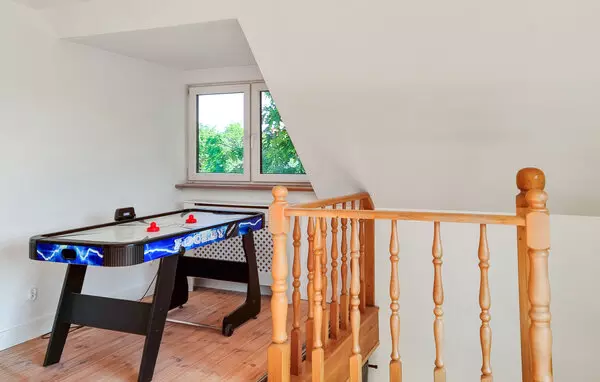
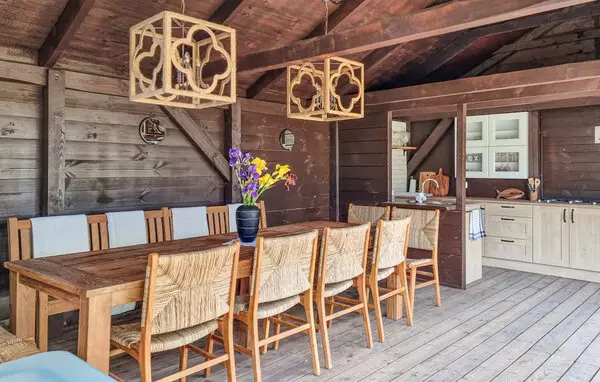


About Szalstry. This spacious holiday home sits right on a private beach, offering a bright and airy retreat perfect for large family gatherings or groups of friends. Modern, tasteful and well-equipped, it provides plenty of entertainment including air hockey and an outdoor football area. Cook together in the kitchen or enjoy meals on the covered terrace with summer kitchen. The property features a fishing lodge, smokehouse and complimentary SUP board. Swim and fish in the lake just metres away, or visit nearby Olsztyn with its medieval old town, 600-year-old cathedral and 15 lakes set in moraine landscape.
Nearby attractions. Golf course: 24 km
Swimming pool: 10 km
Horse hire: 500 m
Bowling: 20 km
Water park: 20 km
Thermal bath: 40 km
Marked walking trail (5-10 km): 100 m
Marked cycling trail (5-10 km): 100 m
Fitness centre: 20 km
Airport (SZY): 90 km
Fishing: 10 m
Shopping: 200 m
Lake swimming: 200 m
Restaurant: 1 km
Nearest city (Olsztyn): 20 km
Lake: 10 m
About Masuria
The property itself, a cluster of traditional wooden buildings with steeply pitched roofs and a satisfying creak to every floorboard, sat perhaps two hundred metres from the edge of Lake Dargin. Tadeusz showed me round with the unhurried pride of someone who had built most of it himself. The main house had a veranda that wrapped around three sides, furnished with weathered chairs that looked like they had hosted several generations of post-swim exhaustion. My smaller cabin, set slightly apart among birch trees, smelled of pine resin and old books. I dumped my rucksack, opened the windows to let in the lake air, and immediately felt the particular loosening that comes from leaving ordinary life behind. I had arrived with ambitious plans. The guidebook, consulted during a rainy Tuesday in Birmingham, had promised excellent walking. Masuria's lakeland terrain, all gentle moraine hills and mixed forest, was supposedly at its finest in late May. I had packed accordingly: proper boots, waterproof trousers, a hat with a flap for the neck that I now suspected made me look like an elderly ornithologist. The weather, when I set out the following morning, was glorious. Sunlight filtered through oak and hornbeam, the path along the lake shore was dry and springy underfoot, and I felt smug in that particular way of the English abroad who believe they have timed everything perfectly. The trail wound north from the property, following the water's edge through alternating stands of forest and open meadow. I passed a small harbour where three fishing boats sat idle, their owners drinking coffee from thermos flasks and watching me with the detached curiosity reserved for obvious foreigners. The lake itself was the colour of weak tea near the shore, darkening to something more serious further out, and the opposite bank sat low and green, barely distinguishable from its own reflection. I walked for perhaps two hours, stopping to watch a marsh harrier quartering the reeds, feeling pleased with my fitness and my foresight. The weather turned with the theatrical suddenness that I have since learned is characteristic of the region. One moment I was unzipping my jacket against the warmth; the next, a wind arrived from the east that felt like it had started in Siberia and picked up velocity across the entire Russian plain. The sky curdled from blue to something yellowish and threatening. I had reached a small headland, maybe four kilometres from the property, when the first raindrops arrived. These were not English raindrops, polite and tentative. These were full-bodied, aggressive, almost personal. Within five minutes I was soaked in a way that suggested my waterproof trousers had been lying about their qualifications. I turned back, now walking into the wind, which had the helpful effect of driving the rain directly into my face regardless of which direction I attempted to face. The path, so pleasant earlier, had become a channel of muddy water. My boots, previously trustworthy, developed an intimate relationship with the clay soil that added several kilograms to each step. I passed the harbour again; the fishermen had vanished, presumably possessing the local knowledge to predict this transformation. The marsh harrier, wiser than me, had also departed. By the time I reached the property's gate, my earlier landscaping incident was barely visible beneath the general disintegration of my appearance. Tadeusz was on his veranda, drinking tea, watching my approach with the same patient expression. He said nothing, simply poured a second cup and pushed it across the table as I dripped onto his boards. We sat in companionable silence, watching the rain turn the lake surface grey and violent, the opposite bank now vanished entirely into mist. "You walked north?" he asked eventually. I nodded. "Always the wind from the east in May," he said, not unkindly. "Tomorrow, if sun, you walk south. Better trees for shelter." I spent the remainder of that afternoon in my cabin, wrapped in a blanket that smelled of wood smoke, reading a Polish detective novel I could not understand and watching the weather perform its erratic variations. The rain stopped, started again harder, then cleared to reveal a sky of almost offensive blueness, as if nothing had happened. I ventured out to the lake shore, where the evening light lay golden across the water and the reeds steamed slightly in the sudden warmth. A family of coots picked through the shallows with their usual frantic industry. Everything smelled of wet earth and fresh growth. That evening, Tadeusz's wife brought me pierogi and a small glass of something clear and medicinal. We attempted conversation, her English slightly better than my Polish, though this set a low bar. She told me about the property's history, how it had been her grandparents' before the war, how the name "Szalstry" came from an old word for willow, which grew in profusion along the stream behind the main house. I told her about my walking plans, now slightly humbled. She nodded, made a gesture that seemed to indicate the weather was not to be trusted, and refilled my glass. I slept better than I had in months, the particular deep sleep that comes from fresh air and physical exhaustion and the faint sound of water lapping against a distant shore. In the morning, cautiously, I opened my curtains to find sunshine and a light breeze from the west. I walked south, as advised, through forest that thickened and thinned in satisfying alternation, following a stream that eventually led to a smaller lake I would not have found without local guidance. The path was muddy in places from yesterday's rain, but manageable. I walked for hours, stopping to eat bread and cheese on a fallen log, watching dragonflies establish their territories above the water. That pattern established itself over the days that followed. Morning walks in whatever direction the weather permitted, always returning for the afternoon when the atmosphere typically rearranged itself. I grew familiar with the particular character of the local paths, their tendency to disappear into marshy ground without warning, the way certain trees served as reliable landmarks. I learned to read the sky in a rudimentary fashion, to recognise the particular darkness that meant business. My boots, properly dried and treated with something Tadeusz provided, regained their dignity. The hat with the neck flap, I am forced to admit, proved its worth on several occasions. On my final morning, I walked north again, to the headland where the storm had caught me. The weather held fair, the view across the lake stretched clear to the horizon, and I stood for some time considering the difference between the walker I had been and the slightly more weatherwise version I was becoming. The property was visible from here, its wooden buildings settled comfortably among the trees, smoke rising from the main house's chimney. I had arrived with plans and assumptions, and was leaving with something more useful: the particular knowledge of a place that only comes from being occasionally defeated by it, then learning to pay better attention. I made my way back slowly, arriving in time for a final cup of tea with Tadeusz. He asked if I would return. I said I thought so. He nodded, as if this were obvious, and helped me reverse out of the drive with a degree of supervision that suggested the flowerbed remained in his memory. The sat nav, I noticed, still insisted on "Salisbury." I ignored it, found my own way to the main road, and drove south through forests that now felt faintly familiar, almost friendly, in the particular manner of places that have surprised you into affection. |
| Home - Articles - About - Contact |
| Our Destinations: Austria - Belgium - Croatia - Cyprus - Denmark - France - Germany - Greece - Italy - Montenegro - Netherlands - Norway - Poland - Portugal - Slovenia - Spain - Sweden |
| © 2026 UK Cottages is part of Exclusive Travel Group Ltd™. Reg Nu 16861677 |


 7.
7.  3.
3.