
Go Back

Go Back |
|
Italy Self Catering holiday properties in and around Umbria |
Todi. Umbria. Italy From £loading... for 7 nights |
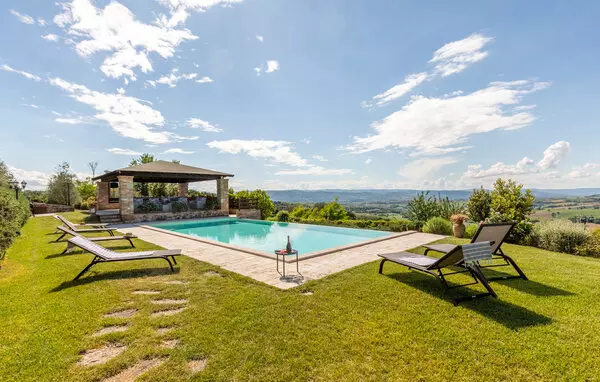
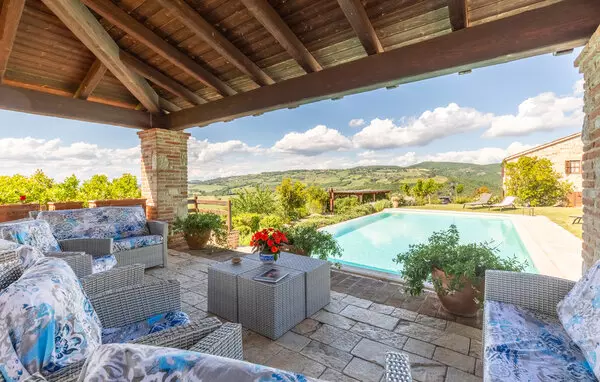
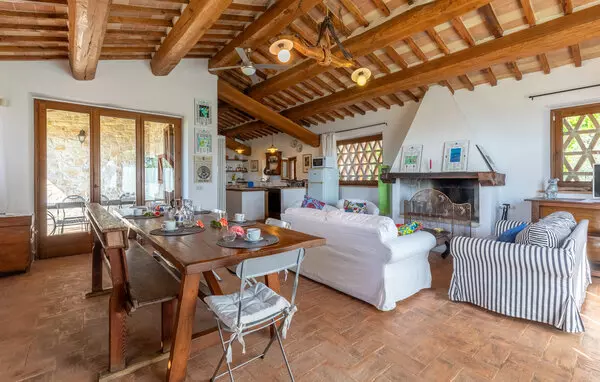
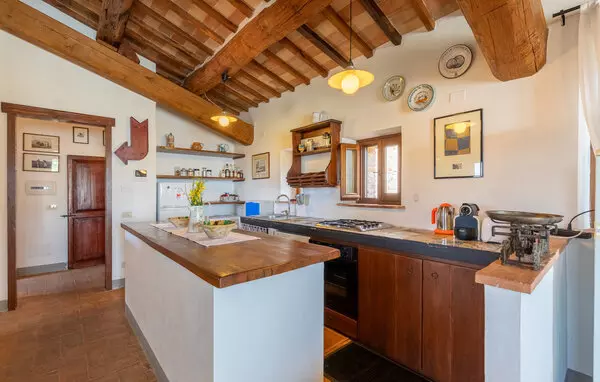
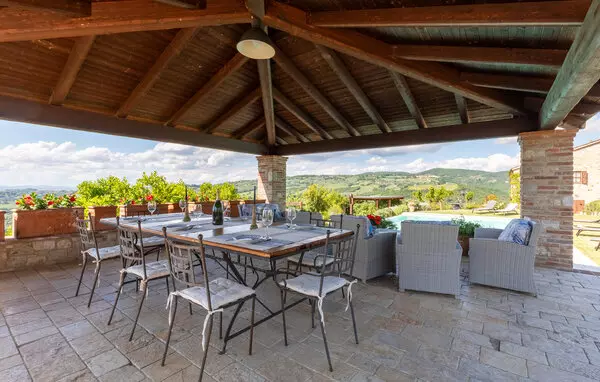
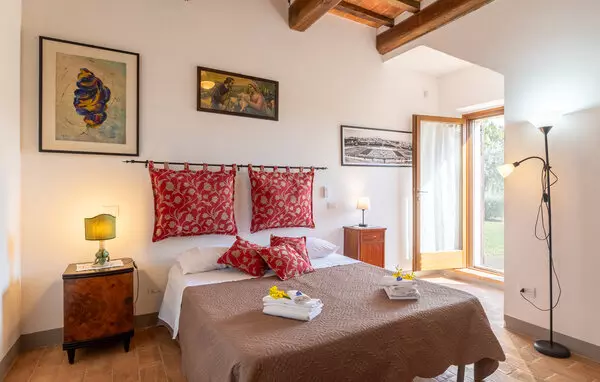
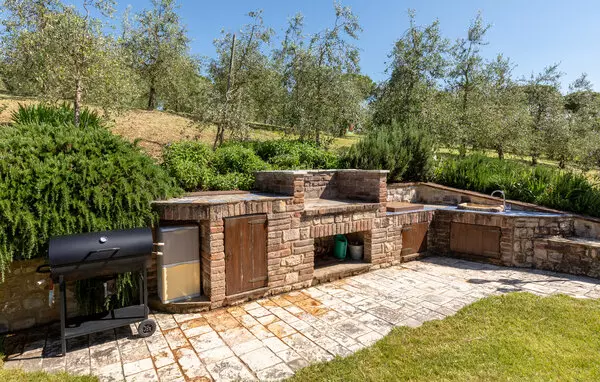
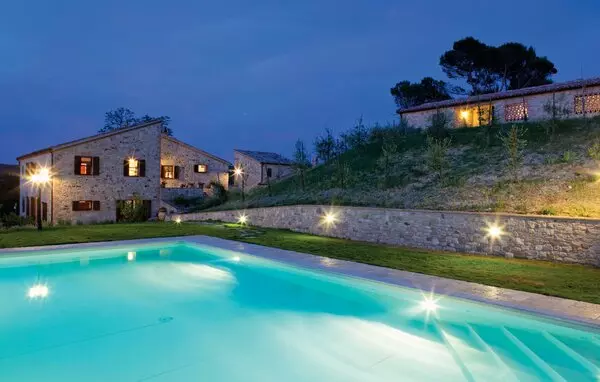
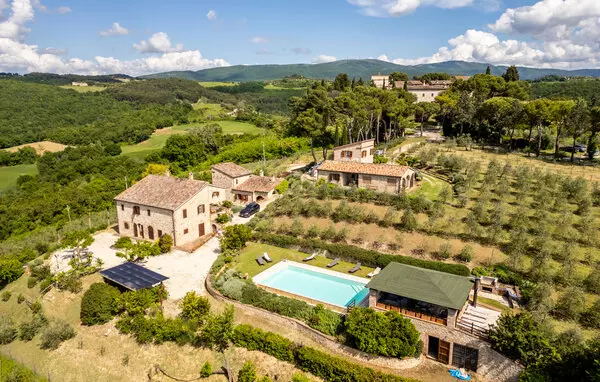
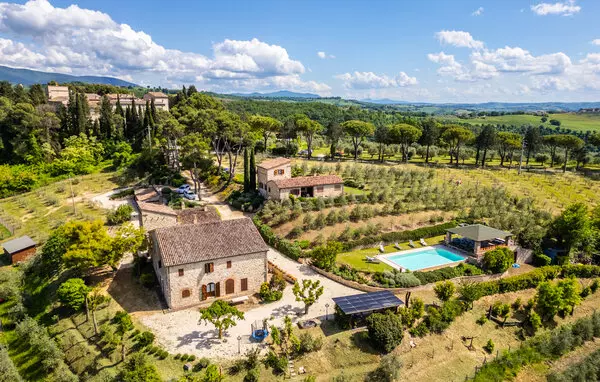
About Todi. This typical Umbrian country house forms part of a 17th-century estate of three buildings overlooking the countryside to Todi. The main house enjoys the finest panoramic view from its equipped terrace across the pool to the rolling Umbrian hills. A few metres away stands the annexe, whilst the owners occasionally reside in the third building. Guests enjoy exclusive use of the manicured garden with infinity pool, large panoramic pavilion for al fresco dining, and adjacent stone barbecue with kitchen and fireplace. Services available on request include cookery classes, wine cellar tours, tastings, and truffle hunting. This rustic borgo retains authentic materials, antique furnishings, and Sicilian barbecue tiles. The Todi area hosts food, wine, cultural and musical events throughout summer. The medieval castle of Petroro lies roughly 150 metres away, partly under the same ownership. Distances: Todi 8 km, Montefalco 20 km, Spoleto and Perugia 40 km, Assisi and Orvieto 55 km, Rome 142 km, Siena 145 km, Florence 190 km. A well-equipped wellness centre and excellent starred restaurant stand nearby, available on request for a fee.
Nearby attractions. Thermal bath: 10000 m
Marked trail, length 0-5 km: 200 m
Mountain bike trails, 0-5 km: 200 m
Fitness centre: 10000 m
Distance airport: PEG: 44000 m
Nearest habitation: 10 m
Distance shopping: 5000 m
Nearest restaurant: 5000 m
Nearest city: 8000 m (Todi)
About Umbria
We arrived at the property with dust on the windscreen, my dignity in tatters, and a sudden desperate need for something edible. The house itself, a proper stone farmhouse with a terrace that looked out over rolling hills, immediately made the sat nav fiasco feel worthwhile. But the kitchen, ah, the kitchen. A vast room with terracotta floors, a wooden table that could seat eight, and most importantly, a proper cooker that suggested serious culinary business could be conducted there. I had plans. Grand plans. I had watched far too many television chefs and was convinced that a week in Umbria would transform me into some sort of rustic Italian cooking deity. My first attempt at transformation came the following morning at the weekly market in Todi itself. The town rises up on its hill like something from a medieval painting, all honey-coloured stone and narrow streets, and on market days the Piazza del Popolo area fills with stalls that make you want to buy absolutely everything. I purchased vegetables with the enthusiasm of someone who definitely knew what to do with them. Aubergines that were glossy and firm. Tomatoes that actually smelled of tomatoes, which feels increasingly miraculous back home. A bunch of basil so fragrant I kept sniffing it like a weirdo as we wandered about. I also bought some local lentils from Castelluccio, because the stallholder looked so disappointed when I hesitated, and a bottle of olive oil that cost more than I had planned but came with a ten-minute lecture about its pressing that I could not escape without purchasing. Lunch that day was meant to be a simple pasta with tomato sauce. Simple, I thought. How hard can simple be? The tomatoes were perfect, the basil was perfect, the garlic was local and fierce. What I had not accounted for was the difference between British gas hobs and whatever volcanic force this Italian cooker possessed. I burned the garlic in approximately forty seconds. The kitchen filled with smoke. My partner opened every window and made meaningful comments about ordering pizza. I soldiered on, because I am stubborn and because those tomatoes had cost me emotional energy. The resulting sauce was edible, just, though it had a background note of carbon that no amount of basil could mask. We ate it on the terrace with the view, and I told myself that everything tastes better with a view. This is mostly true, but not entirely. The turning point, food-wise, came from surrender. The following day we found a small alimentari in a village even smaller than our mistake with Sheila. The owner, a woman called Carla who spoke approximately twelve words of English and used them with devastating precision, took pity on me. I had been staring at packets of dried pasta with the lost expression of someone who had already failed at fresh tomatoes. She asked, in Italian that I mostly understood through hand gestures, whether I could cook. I admitted that this was questionable. She sold me some strangozzi, a local hand-rolled pasta that looks like thick, rustic spaghetti, and told me exactly what to do with it. No burnt garlic. No fancy attempts. Just good oil, good pecorino, and black pepper. She even wrote it down, though her handwriting resembled architectural plans more than a recipe. That evening I followed instructions like my life depended on it. The strangozzi went into properly salted water, the oil warmed gently with nothing burned whatsoever, and I grated the pecorino with the focus of a brain surgeon. The result was not restaurant food. It was better than that, somehow, because Carla had trusted me with it and because I had finally stopped trying to be clever. We ate it with local wine that cost six euros and tasted like it should cost thirty, and I felt genuinely proud of myself in a way that no ready meal has ever achieved. The rest of the week settled into a rhythm of market mornings, cooking attempts that gradually improved, and the occasional emergency purchase of excellent local bread and cheese when my ambitions exceeded my abilities. We discovered that the butcher in Todi would prepare meat for the grill if you asked nicely, and that grilling over proper charcoal while watching the sun go down behind the hills was about as close to happiness as I get. I made a decent ribollita on our fourth attempt, having learned that Tuscan and Umbrian versions differ in ways that locals feel strongly about, and that my first version had apparently committed some sort of soup crime that I still do not fully understand. On our final morning I made coffee in the kitchen, stood on the terrace with a slice of leftover torta al testo, and watched the mist clear from the valley below. The sat nav sat in the car, unloved and unthanked. I had not become a cooking deity. I had become someone who could follow simple instructions from kind strangers, who knew that good ingredients need less interference than bad ones, and who would genuinely miss a kitchen that was not my own. We left with olive oil in our luggage, lentils in a plastic bag, and a handwritten recipe in architectural script that I treasure more than any souvenir. Some holidays change you. This one mostly changed what I cook for dinner, and honestly, that feels like enough. |
| Home - Articles - About - Contact |
| Our Destinations: Austria - Belgium - Croatia - Cyprus - Denmark - France - Germany - Greece - Italy - Montenegro - Netherlands - Norway - Poland - Portugal - Slovenia - Spain - Sweden |
| © 2026 UK Cottages is part of Exclusive Travel Group Ltd™. Reg Nu 16861677 |


 5.
5.  0.
0.