
Go Back

Go Back |
|
Italy Self Catering holiday properties in and around Lazio |
Montefiascone. Lazio. Italy From £loading... for 7 nights |
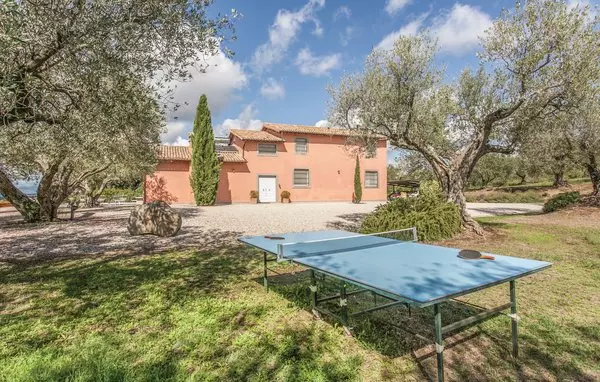
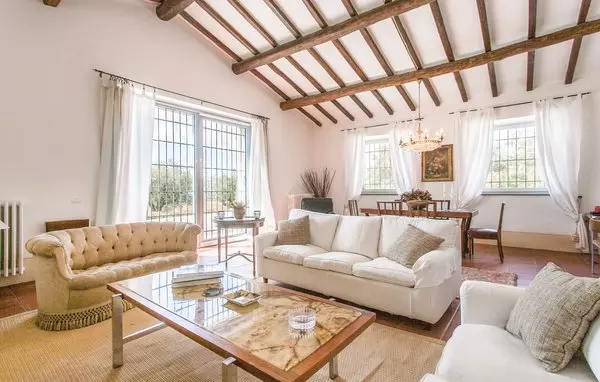
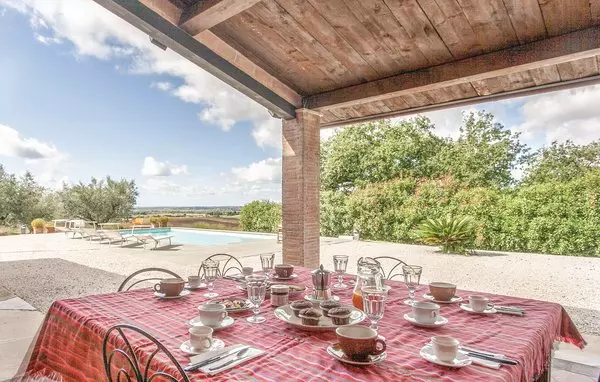
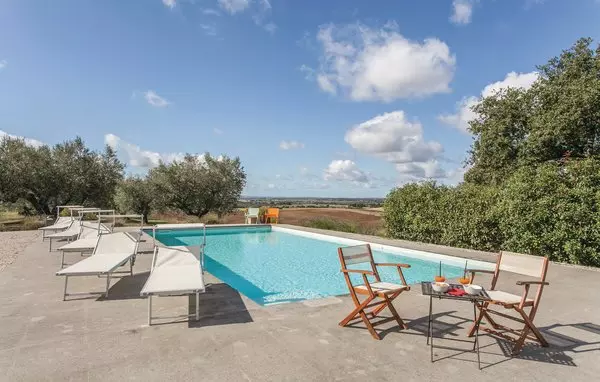
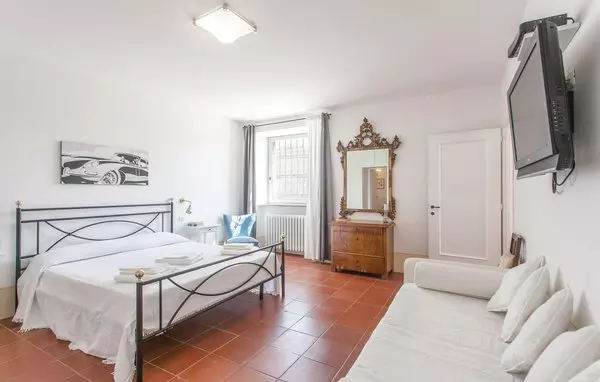
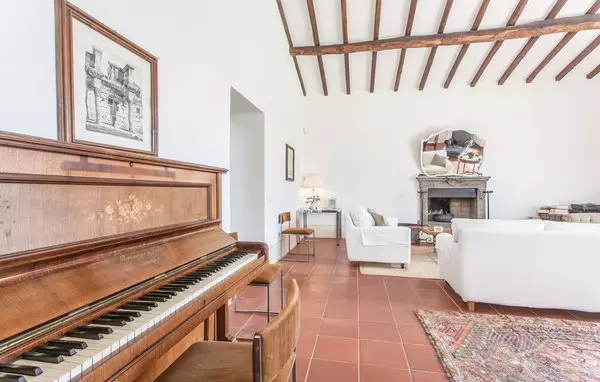
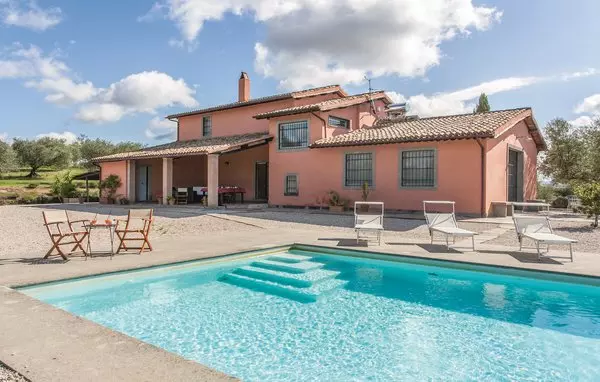
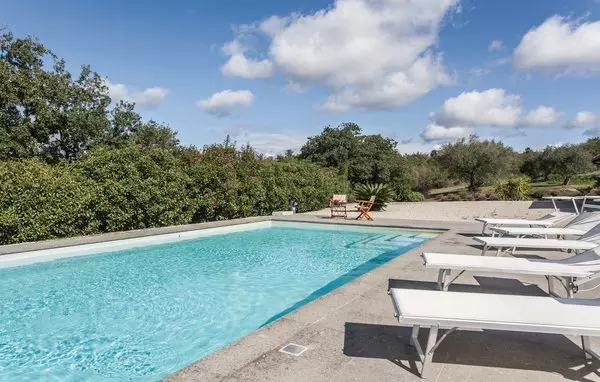
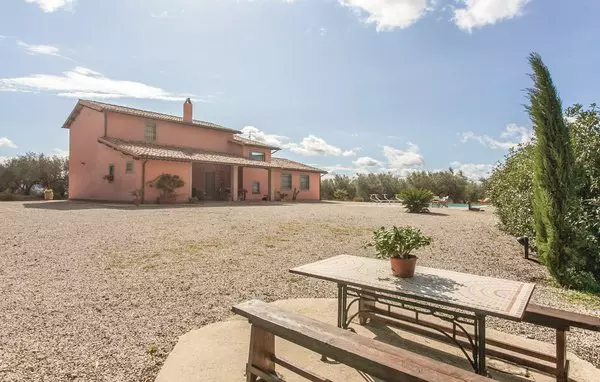
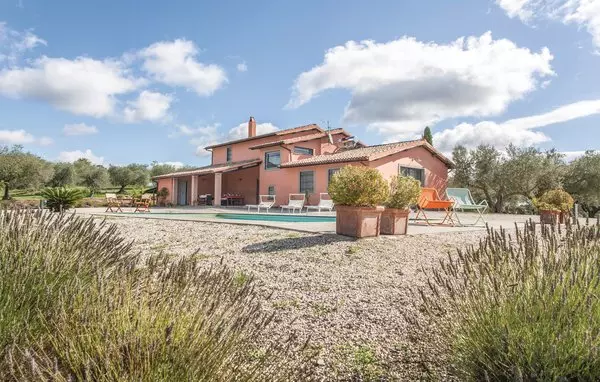
About Montefiascone. Former oil mill on a 250 hectare organic olive estate, 8 km from Lake Bolsena. Tour the private mill and taste extra virgin olive oils produced on site. Welcoming, well-kept interiors; spacious grounds with panoramic pool and sun terrace. Lovely views across the olive-covered valley. Peaceful setting. Lake Bolsena's beaches and medieval villages 8 km; Montefiascone (shops) 11 km; Viterbo's thermal baths 17 km; Civita di Bagnoregio 20 km; Tarquinia and Tyrrhenian beaches 52 km. A relaxing break blending nature with modern comfort. Arrivals 4-8 pm only.
Nearby attractions. Thermal bath: 14 km
Marked trail (5-10 km): 10 km
Mountain bike trails: 50 m
Fitness centre: 15 km
Airport (PEG): 107 km
Nearest habitation: 500 m
Shops: 8 km
Beach with entry fee: 52 km
Restaurant: 8 km
Nearest city (Viterbo): 17 km
Lake: 8 km
About Lazio
The house sat on a hillside with terracotta roofs and shutters the colour of faded lemons. I reversed up the gravel drive with the confidence of a man who had never reversed up a gravel drive, and promptly knocked over a terracotta pot that turned out to be empty. My partner's eyebrow raised. "Decorative," I announced, with the authority of someone who absolutely knew that now. Inside, the kitchen was the first thing that mattered. Stone floors, wooden beams thick as my thigh, and a gas hob that looked like it had cooked for partisans. I opened the fridge with the reverence of a pilgrim. Empty, of course, but humming with promise. On the counter sat a bottle of the local Est! Est!! Est!!! wine, left by the owner with a note: "You will need this." Never has a stranger known me so intimately. We unpacked in a daze, then drove the ten minutes down to Montefiascone proper. The town clings to its volcanic hill like it is not entirely sure about the whole flat-ground business. We found a parking spot that defied geometry and wandered into the centro storico as the evening light turned everything honey-coloured. My mission was singular: find dinner, and find it immediately. We settled at a trattoria near the cathedral, drawn by the smell of guanciale rendering in olive oil. I ordered amatriciana because when in Lazio, you do not argue with tradition. My partner had cacio e pepe, which arrived looking deceptively simple and tasting like someone had distilled the concept of comfort into a bowl. The wine was, predictably, the local white. I drank it too fast and felt no shame. The waiter, a man whose moustache deserved its own postal code, brought us complimentary slices of ciambella, a ring cake that tasted of lemon and regret that I do not live here permanently. The next morning, the real work began. We had resolved to self-cater properly, to live like locals, to shop like Italians. The Thursday market in Montefiascone's Piazza del Pilastro was our proving ground. I approached it with the nervous energy of a man who once bought what he thought was fresh mozzarella in Manchester and only discovered his error three days later. The market was glorious chaos. Vendors shouted prices like auctioneers. An old woman elbowed me firmly aside to inspect a crate of artichokes, and I respected her deeply for it. We bought pecorino romano from a shepherd who kept his cheese under damp cloths in wooden crates. We bought tomatoes that smelled of actual tomatoes, a concept I had forgotten existed. We bought dried lentils from nearby Castelluccio, a string of garlic, a bunch of wild fennel that the vendor insisted we would "know what to do with." I did not know what to do with. I nodded like I did. Back at the house, I attempted to cook. The kitchen became my arena, my colosseum, my site of repeated minor humiliations. I had planned to make a proper pasta e lenticchie, a Lazio staple. I soaked the lentils with what I felt was appropriate seriousness. I chopped the guanciale I had bought from a macelleria where the butcher called me "professore" despite overwhelming evidence to the contrary. The fennel sat on the counter, watching me, judging. The gas hob roared like a dragon with indigestion. I burned the first lot of garlic to the point where even opening windows could not save the atmosphere. My partner, reading on the terrace, shouted "Smells interesting!" which is the most devastating thing a person can say. I started again. Second lot of garlic, lower heat, more humility. The lentils went in with water from the tap that ran cold and metallic from the volcanic rock. I added the fennel because courage is not the absence of fear but the addition of wild herbs despite uncertainty. It took two hours. The result was not beautiful. It was, however, honest. We ate it on the terrace with more of that Est! Est!! Est!!! and bread from the forno we had found near the market, a place where the baker still uses a wood oven and where I bought a loaf that weighed as much as a bowling ball. The sun set over Lake Bolsena, turning the water the colour of the amatriciana I had eaten the night before. My partner said it was good. I chose to believe her. The following days settled into a rhythm of eating, attempting to cook, and eating again. Breakfast became a ritual of cornetti from the bar in town, eaten standing at the counter like proper people, drinking coffee that made me realise I had been drinking brown water my entire life. Lunch was whatever we had assembled from the market: bread, cheese, tomatoes sliced and dressed with oil that the owner had left in a dented tin, which poured out green and peppery and nothing like the supermarket version I was accustomed to. I tried to make carciofi alla romana, the Roman-style artichokes. I had watched a video. I had confidence. The artichokes I bought were the proper Romanesco variety, purple-tipped and tight. I trimmed them with a blunt knife and the patience of a man who has never trimmed an artichoke in his life. They turned grey. They turned more grey. I cooked them anyway with garlic, mint, and white wine, and they tasted of effort and chlorophyll. My partner photographed them with what I suspect was documentary intent rather than aesthetic appreciation. The market became my education. I learned to ask for "due etti" of prosciutto and have it sliced to my preferred thinness, which is to say, thin enough to read through. I learned that the cheese man would give me a taste if I looked sufficiently interested, and that looking sufficiently interested required only standing near his stall with the expression of someone who understands mortality. I learned that the fruit vendor would tut at my selection of peaches and replace them with better ones, and that this was not rudeness but a form of love. One evening, determined to honour the region properly, I attempted to make cacio e pepe myself. It is three ingredients. Pasta, pecorino, pepper. How difficult could three ingredients be? The answer, I discovered, is cosmically difficult. My first attempt produced a clotted, grainy mess that resembled porridge more than pasta. I had overheated the cheese, or under-stirred it, or offended some ancient Roman deity. I ate it anyway, standing at the kitchen counter, drinking wine directly from the bottle like a man defeated but not destroyed. The second attempt, made after consulting the internet and a YouTube video featuring a man in Rome who treated cacio e pepe with the gravity of heart surgery, was better. Not perfect. Better. The cheese emulsified into something approaching silk. The pepper was aggressive in the way it should be. I served it with the ceremony of a man who has climbed a small mountain, which in culinary terms, I had. We ate out too, of course. A pizzeria in the lower town where the dough was fermented for seventy-two hours and where I ordered a capricciosa and considered never eating pizza in Britain again. A seafood restaurant in Marta, on the lake, where we had eel prepared two ways and I discovered that eel, properly done, is not the rubbery horror of my childhood but something delicate and sweet. The owner came to our table to explain that the eel came from the lake that morning, that his grandfather had fished the same waters, that the recipe was his grandmother's. I believed every word. The wine was Orvieto, from just across the regional border, and it tasted of limestone and tradition. But it was the cooking, the failed and the semi-successful, that stayed with me. The kitchen in that stone house became a place of gentle comedy and occasional triumph. I made a proper ragu one Sunday, simmering it for four hours while reading a paperback and drinking more wine than the recipe strictly required. I made bruschetta with tomatoes so ripe they barely held together, the bread rubbed with garlic and grilled on a wire rack over the hob because the house had no toaster and I was too stubborn to buy one. On our last morning, I made one final market trip. I bought cheese to take home, wrapped in paper that grew translucent with oil. I bought a jar of local honey, dark as treacle, from a man who kept bees on the volcanic slopes. I bought nothing practical, nothing sensible, only things that would remind me of the taste of that week. We left the house early, the sun just touching the lake. I had cleaned the kitchen with unusual thoroughness, as if tidiness could express gratitude. The terracotta pot I had knocked over on arrival sat upright again, filled now with wildflowers from the hillside. A small restoration. A minor redemption. In the rear-view mirror, Montefiascone disappeared into its hill. My partner was already dozing, full of the breakfast we had made: bread, cheese, the last of the tomatoes, coffee from the moka pot I had finally learned to use without producing something that tasted of aluminium and regret. I drove more carefully this time. The sat nav behaved. We did not encounter any goats. But I found myself already planning a return, already thinking of the market on Thursday, of the cheese man's stall, of the fennel I might finally understand what to do with. Some places you visit. Some places you learn to cook in, slowly, with burnt garlic and stubborn hope, until they become part of how you understand the world, or at least how you understand dinner. |
| Home - Articles - About - Contact |
| Our Destinations: Austria - Belgium - Croatia - Cyprus - Denmark - France - Germany - Greece - Italy - Montenegro - Netherlands - Norway - Poland - Portugal - Slovenia - Spain - Sweden |
| © 2026 UK Cottages is part of Exclusive Travel Group Ltd™. Reg Nu 16861677 |


 3.
3.  1.
1.