
Go Back

Go Back |
|
Germany lovely holiday properties in and around Lower Saxony |
Tossens. Lower Saxony. Germany From £loading... for 7 nights |


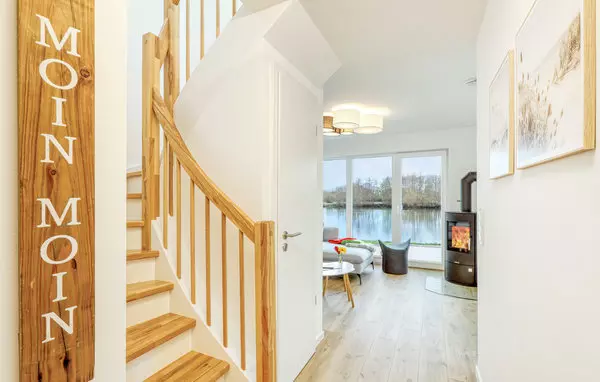
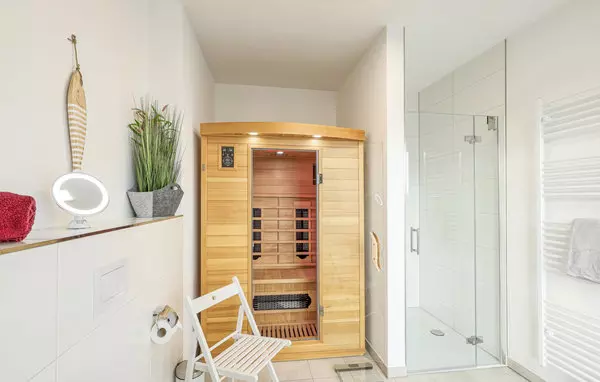

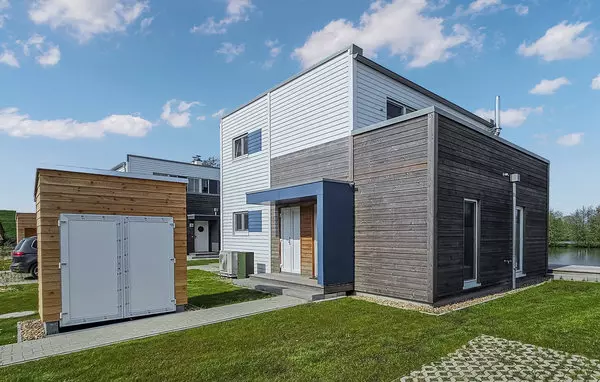


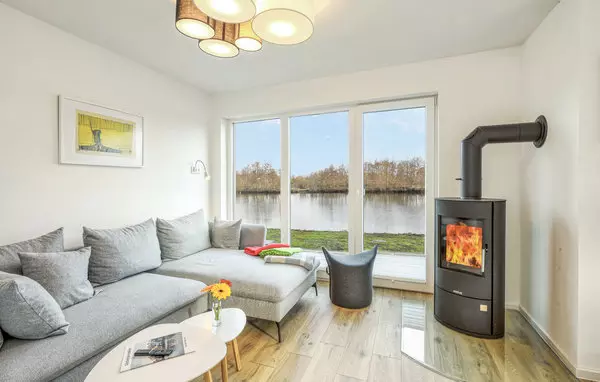
About Tossens. The Heimdall semi-detached house sits in Tossens on the Butjadingen peninsula, part of the UNESCO Wadden Sea World Heritage Site. This two-floor family holiday home features an open-plan living area with garden terrace, modern fitted kitchen with large windows, and a built-in fireplace for chilly evenings. The ground floor also holds a bedroom, guest WC and under-stair storage. Upstairs, a curved staircase leads to a spacious bedroom, bathroom with infrared sauna, and balcony overlooking the North Sea air. Quality furnishings throughout make this a proper dream getaway. Butjadingen enjoys a sheltered spot on the Inner Jade with easy trips to historic Bremen, Bremerhaven harbour, and Friesenstrand's viewing tower across to Wilhelmshaven. Younger visitors will enjoy the pirate adventure playground and North Sea lagoon.
Nearby attractions. Distance shopping: 2000 m
Nearest restaurant: 1000 m
Nearest city: 25000 m (Nordenham)
Nearest Airport: 87000 m
Distance water: 100 m (Lake)
About Lower Saxony
We found our way eventually, winding through the flat green landscape of Lower Saxony with its endless fields and the occasional wind turbine standing sentinel against the grey sky. The roads grew narrower, the villages smaller, until we reached Tossens itself, a quiet coastal spot on the Butjadingen peninsula where the North Sea meets the Wadden Sea in that particular way that makes you feel you've reached the edge of something. Our holiday home was one of those tidy wooden houses in a small park, the sort that looks exactly like its photograph in a slightly unsettling way. I fumbled with the key safe, dropping the code card into a puddle in the process, and made a mental note that this trip was already establishing a theme. It was our neighbour who first appeared, a wiry man in his sixties called Dieter who seemed to have been waiting for precisely this entertainment. He emerged from next door with two cups of coffee and a knowing smile, apparently having watched my entire key safe performance through his kitchen window. "First time in Tossens?" he asked, though it clearly wasn't a question requiring an answer. He handed me a coffee without asking if I wanted one, which I found rather brilliant. Germans, in my limited experience, either ignore you entirely or adopt you without ceremony. Dieter had chosen the latter. His English was patchy but enthusiastic, heavily accented and delivered with theatrical hand gestures. He told us he'd retired here from Hanover twelve years ago, that his wife had insisted on the coast, and that he'd spent the first six months complaining about the wind before realising it was the only thing keeping him awake. "In Hanover," he said, "I sleep like dead. Here, I am alive but complaining." He laughed at his own joke with genuine delight, the sort of unselfconscious enjoyment that made me immediately fond of him. His wife Ingrid appeared shortly after, a compact woman with close-cropped grey hair and the practical air of someone who has spent decades managing other people's chaos. She took one look at my still-damp code card and produced a proper towel from somewhere, handing it over with the efficiency of a nurse dispensing medicine. "Dieter has adopted you," she said, not unkindly. "It happens. Last year it was a Dutch couple with a broken bicycle. He is like a dog with visitors. Cannot help himself." We stood there in the fading afternoon light, the wind coming in off the sea with that particular North Sea freshness that feels less like weather and more like a personality trait. Dieter pointed out the local landmarks with the pride of a mayor, though his information was charmingly unreliable. The bakery closed at six, unless it was Thursday, when apparently it closed at half past five because the owner's mother visited. The path to the beach was "five minutes, maybe ten, depends how much you like to walk slow." The best fish restaurant was in Burhave, which he pronounced with a guttural flourish that made it sound like a command rather than a place name. A younger woman passed by with a dog, and Dieter immediately hailed her with what I can only describe as aggressive friendliness. This was Claudia, his daughter, visiting for the weekend from Oldenburg. She had her father's build and her mother's expression of long-suffering competence. "He has already told you about the bakery," she said, not a question. "And the wind. And probably his blood pressure." Dieter looked wounded. "My blood pressure is excellent," he protested. "The doctor said so. I have the paper." Claudia rolled her eyes with the practised ease of someone who has performed this routine many times. "He shows everyone the paper. It is his favourite possession." She explained that she worked in a bookstore in Oldenburg, which seemed to me the perfect job for someone with her particular quality of patient amusement. When I mentioned I was a reader, she immediately produced a recommendation, writing it on the back of my damp code card with a pen that appeared from her coat pocket. "For the wind," she said, as if this explained everything. "When you cannot go out because of Dieter's beloved weather." The afternoon slipped into evening with that particular coastal swiftness, the light changing from grey to gold to something approaching darkness without the proper notice I felt we deserved. Dieter and Ingrid retreated to prepare their own dinner, but not before pressing upon us a loaf of bread and some local cheese, "because you will not find the shop now, and anyway it is closed." Claudia stayed a moment longer, explaining the tides with the same patient precision her mother had applied to my wet card. The Wadden Sea, she said, was not to be underestimated. People walked out and forgot to come back, not dramatically but gradually, distracted by the strange landscape of mud and channels until the water returned faster than expected. I thought about that later, sitting in the small wooden house with its efficient German heating and its view of other similar houses, the wind making its presence known against the windows. There was something about this place, these people, that felt like the opposite of my usual hurried tourism. Dieter's aggressive hospitality, Ingrid's practical kindness, Claudia's literary recommendations delivered with maternal warning about natural dangers. They had made us part of something without asking permission, and I found I didn't mind at all. My partner was already investigating the kitchen, making satisfied noises about the coffee machine. I stood at the window watching the last light fade over the flat landscape, thinking about how I'd arrived here through a lorry park and a puddle, and how sometimes the wrong turns deliver you to exactly where you need to be. The wind rattled the frame, and I understood what Dieter meant about staying awake. |
| Home - Articles - About - Contact |
| Our Destinations: Austria - Belgium - Croatia - Cyprus - Denmark - France - Germany - Greece - Italy - Montenegro - Netherlands - Norway - Poland - Portugal - Slovenia - Spain - Sweden |
| © 2026 UK Cottages is part of Exclusive Travel Group Ltd™. Reg Nu 16861677 |


 2.
2.  0.
0.