
Go Back

Go Back |
|
Germany lovely holiday properties in and around Lower Saxony |
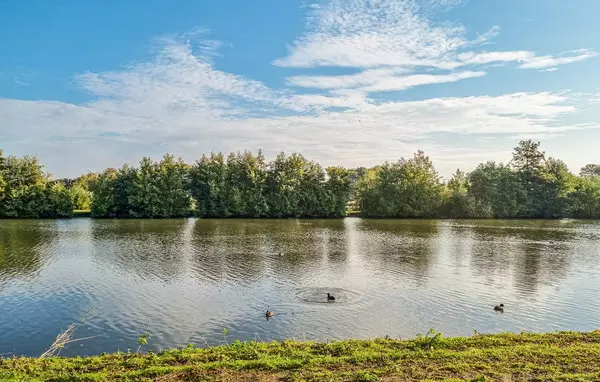
Tossens. Lower Saxony. Germany From £loading... for 7 nights |
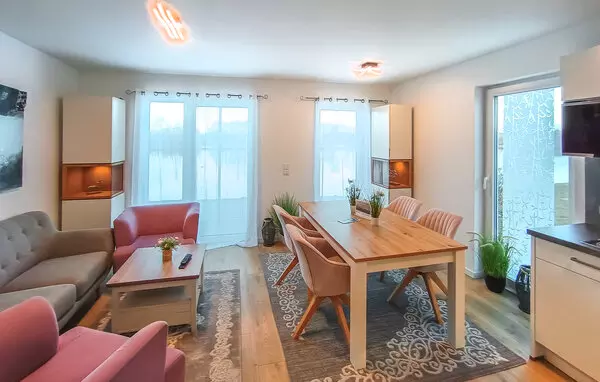


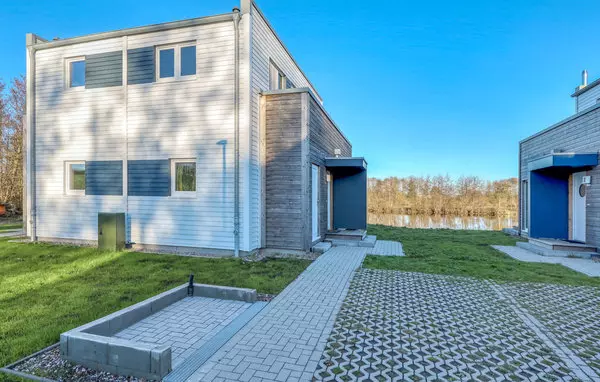

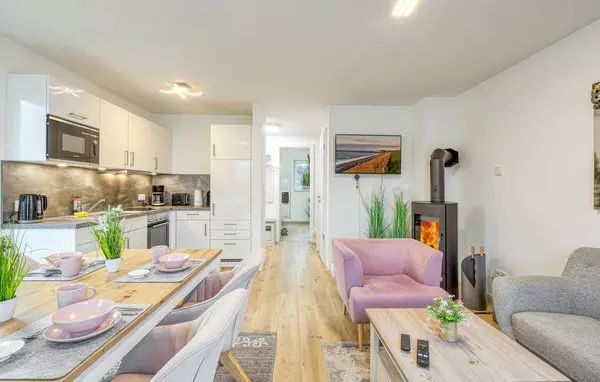
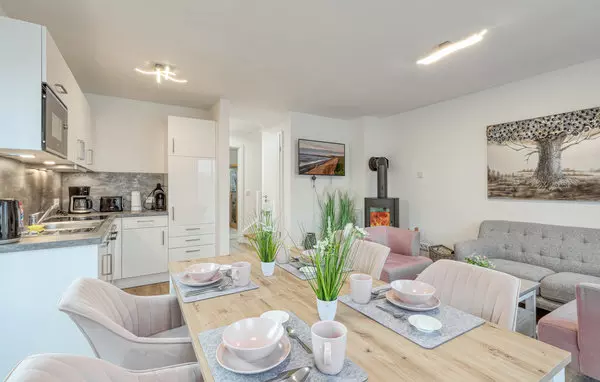
About Tossens. Thor, a semi-detached house named after the Norse god of thunder, sits in Tossens on the Butjadingen peninsula beside the UNESCO Wadden Sea. The two-storey holiday home features an open-plan living area with garden terrace, modern fitted kitchen with floor-to-ceiling windows, and a built-in fireplace. A bright bathroom with shower and infrared sauna completes the ground floor. Upstairs, two spacious bedrooms share a wrap-around balcony overlooking the North Sea. High-quality furnishings throughout make this an ideal family retreat. Butjadingen offers sheltered waters on the Inner Jade, with Bremen, Bremerhaven, and Wilhelmshaven nearby for day trips. Children will enjoy the pirate playground and North Sea lagoon.
Nearby attractions. Distance shopping: 2000 m
Nearest restaurant: 1000 m
Nearest city: 25000 m (Nordenham)
Nearest Airport: 87000 m
Distance water: 100 m (Lake)
About Lower Saxony
By the time I reached the holiday home, I was two hours late and had developed an intense personal relationship with a crumpled map from a petrol station. The property sat among similar wooden houses, all neat angles and sensible German efficiency, with the North Sea air already doing suspicious things to my hair. I had barely stepped onto the decking when a voice called out from next door. "You are the English with the cabbage problem?" Word travelled fast in Tossens. I turned to find a woman in her sixties, gardening gloves up to her elbows, holding a trowel like she might hold a cigarette. This was Ingrid, and she had apparently appointed herself my unofficial welcome committee. She insisted on showing me the proper way to operate the outdoor shower, a procedure that involved approximately fifteen steps and a level of solemnity usually reserved for religious ceremonies. "The previous English," she informed me, "they broke it with enthusiasm." I promised to approach all future showering with appropriate German restraint. The following morning I ventured to the local bakery, partly for provisions and partly to escape Ingrid's ongoing lecture about correct bin separation. The woman behind the counter, whose name badge read simply "Ute," took one look at my attempt to order a Broetchen and switched immediately to English with the resigned air of someone who had witnessed many such failures. "You want the round one or the long one?" she asked, as though this were a philosophical question. I panicked and said "both," which she accepted with a nod that suggested I had failed some unspoken test of character. A man in the queue behind me, wearing a fishing jacket that had seen actual fish, leaned forward and said, "First time in Tossens? Ute will remember you now. She remembers everyone. It is her hobby." Ute did not deny this. She simply wrapped my bread with the efficiency of someone wrapping evidence. That afternoon I walked to the beach, where the Wadden Sea stretched out in that particular grey-green way that makes you understand why Germans have seventeen words for types of coastline. An elderly man was collecting something from the mudflats with a small rake. I made the mistake of asking what he was finding. His name was Klaus, and he had been gathering Wattwuermer for forty years, a fact he delivered with such pride that I found myself congratulating him as though he had announced a Nobel Prize. He insisted on showing me the correct technique, which involved a peculiar wrist movement and a complete disregard for personal cleanliness. "Your hands," he observed, "they are too soft. English hands." I could not argue. My hands were indeed soft. They had not raked mud for four decades. By evening I found myself at a small restaurant near the harbour, the kind where the menu assumes you already know what you want. The proprietor, a heavyset man called Dieter, took my order without writing anything down, then sat opposite me while his wife cooked. "You are staying near Ingrid," he stated rather than asked. I confirmed this. He nodded slowly. "Ingrid knows everything. If you need to know something, ask Ingrid. If you do not want to know something, also ask Ingrid. She will tell you anyway." He said this with genuine affection, the way one might speak of a force of nature. I spent my final morning having coffee with Ingrid, who had decided I needed instruction on proper beach chair etiquette. The Strandkoerbe, those wicker basket affairs that dominate the North Sea coast, apparently came with rules I had never imagined. "You do not sit in one without understanding it," she said, as though I had proposed something indecent. She demonstrated the folding footrest, the little table, the adjustable hood, all with the precision of a flight attendant demonstrating emergency exits. I realised, watching her, that this was how she showed care. Not through warmth exactly, but through thoroughness. Through making certain you would not fail again. As I packed the car for my departure, Klaus appeared from nowhere to press a small jar of pickled Wattwuermer into my hands. "For your soft English hands," he said, and walked away before I could protest. Ute had added an extra Broetchen to my final purchase, wordlessly. Dieter had waved from his restaurant door without coming over, which I understood now as a significant gesture of respect. I left Tossens with mud on my shoes, pickled worms in my luggage, and the certain knowledge that Ingrid was already watching for the next English person with cabbage problems. Some places you visit for the scenery. Some for the history. I had come for the sea air and found instead a collection of peculiar, thorough, unexpectedly kind people who seemed to have decided that my incompetence was worth their patience. I drove past the cabbage field slowly this time, just to check. The farmer was there, watching another car perform the same manoeuvre I had mastered days before. I waved. He did not wave back, but I saw him smile. |
| Home - Articles - About - Contact |
| Our Destinations: Austria - Belgium - Croatia - Cyprus - Denmark - France - Germany - Greece - Italy - Montenegro - Netherlands - Norway - Poland - Portugal - Slovenia - Spain - Sweden |
| © 2026 UK Cottages is part of Exclusive Travel Group Ltd™. Reg Nu 16861677 |


 2.
2.  0.
0.