
Go Back

Go Back |
|
Denmark Luxury holiday properties in and around Zealand |
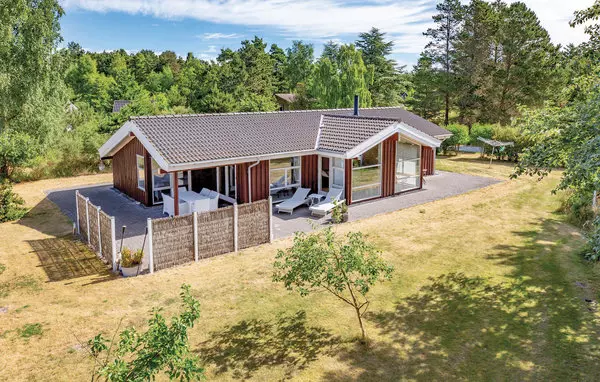
Overby Lyng. Zealand. Denmark From £loading... for 7 nights |

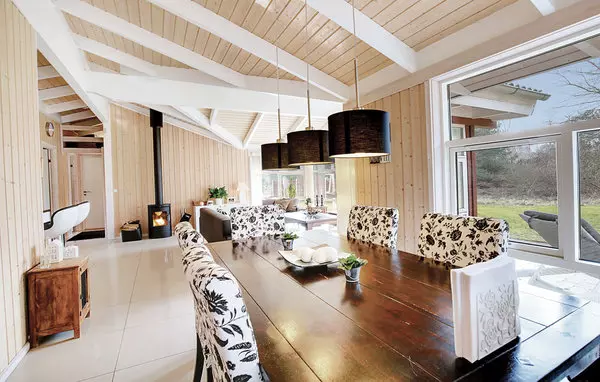


About Overby Lyng. Lovely cottage with modern facilities including washing machine, dishwasher, American fridge and a particularly nice bathroom with large sunken bathtub. Enjoy the nearby bay of Sejero any time of year, with good fishing opportunities. The house has a nice eat-in kitchen, inviting living room, three bedrooms and two bathrooms. Located on the peninsula Sj. Odde between Kattegat and the bay of Sejero, where the water on both sides creates a very special light. Oddsherred offers golf courses, galleries, harbours and beautiful nature.
Nearby attractions. Golf course: 11000 m
Swimming pool: 14000 m
Pet food shop: 1500 m
Dog-friendly beach: 300 m
Vet: 11000 m
Fishing: 550 m
Shopping: 4500 m
Restaurant: 3500 m
Nearest city: 14000 m (Nykobing Sj.)
Water: 550 m (Sandy beach)
About Zealand
Overby Lyng itself appeared in stages. First the red roof through birch branches, then the weathered timber walls, then the small terrace where someone had left a ceramic frog wearing a faded neckerchief. Erik said this was Knud's doing, though he didn't elaborate, and I was too busy shaking road dust from a cashmere jumper to press him. The key was in a rusted tin beneath a potted heather, which felt thrillingly illicit until I realised half of Zealand probably operates this way. Inside smelled of pine and something faintly maritime, which I later learned came from the wood-burning stove's previous life in a fishing hut. The sitting room had low beams I immediately whacked my head on, a sofa with the honest sag of something genuinely used, and windows that framed the sort of flat, grey-green landscape that makes you understand why Danes invented hygge. There was nowhere to hide from the weather here; you had to make peace with it. I met Inge on my first morning, walking her ancient Labrador past the cottage boundary. She wore wellingtons with a tweed skirt and carried a walking stick she clearly didn't need. "You're the English," she said, not as question. "Erik said you were coming. He said you had trouble with directions." I admitted the drainage ditch. She laughed, a proper throaty thing, and told me the last people had got stuck in that same ditch in a Porsche. "They were from Hamburg," she said, as if this explained everything. Inge appeared daily after that, always with the Labrador, always with intelligence from what she called "the network." This was not, I discovered, anything technological. It was Erik, who cycled everywhere and saw everything; it was the woman at the village shop who remembered your purchase from three years prior; it was Knud, the ceramic frog man, who apparently maintained a small museum of agricultural tools in his barn and would show it to anyone who stood still long enough. I stood still on day three, partly from politeness, partly because Knud had materialised beside me while I was examining his frog, and escape seemed socially complicated. The barn museum was extraordinary. Rusted scythes, a hand-cranked seed drill, something called a "potato claw" that looked genuinely violent. Knud spoke mostly in gestures and single words, supplemented by Inge's translations when she wandered in. "He says this one cut his grandfather's thumb off," she relayed, pointing at a hay rake. Knud demonstrated the accident with cheerful vigour, and I found myself laughing in that slightly horrified way you do when someone's family mutilation story has become local entertainment. What struck me, those first days, was how these encounters accumulated without my arranging them. There was no booking system for Inge's appearances, no website for Knud's museum. You simply existed in the place, and the place responded. Erik appeared again with a paper bag of new potatoes from his garden, refusing payment, insisting I try them with dill. The shop woman, whose name I never learned but whose cardigan I came to recognise, asked after my drainage-ditch jumpers on day four, having heard they dried well. I am not naturally someone who chats to strangers. At home I have perfected the Londoner's selective blindness, the polite evasion. Here that armour felt absurd, like wearing a dinner jacket to a beach. These people had time, and they expected you to have it too. They asked questions and waited for answers. They remembered what you told them and referred back to it days later. It was slightly exhausting and completely wonderful. By the end of my first week, I found myself slowing at the cottage gate, hoping for Inge's Labrador to appear. I knocked on Knud's door without his frog ambush as pretext, wanting to see if he'd acquired any new agricultural weapons. I even learned to recognise Erik's bicycle bell, which meant either fresh vegetables or fresh gossip, often both. The flat landscape had stopped looking empty and started looking generous, offering itself up to whoever walked through it slowly enough. I walked slower. I talked more. I became, briefly, someone who knew things about potato claws and drainage ditches and the particular social shame of Hamburg Porsches. It was not a transformation I had planned, which was probably the point. You do not arrive at Overby Lyng with an itinerary; you arrive with your suitcase and your assumptions, and if you're lucky, you lose half of one to a ditch and most of the other to people who have nothing better to do than notice you're there. |
| Home - Articles - About - Contact |
| Our Destinations: Austria - Belgium - Croatia - Cyprus - Denmark - France - Germany - Greece - Italy - Montenegro - Netherlands - Norway - Poland - Portugal - Slovenia - Spain - Sweden |
| © 2026 UK Cottages is part of Exclusive Travel Group Ltd™. Reg Nu 16861677 |


 3.
3.  0.
0.