
Go Back

Go Back |
|
Denmark Luxury holiday properties in and around West Jutland |
Argab. West Jutland. Denmark From £loading... for 7 nights |
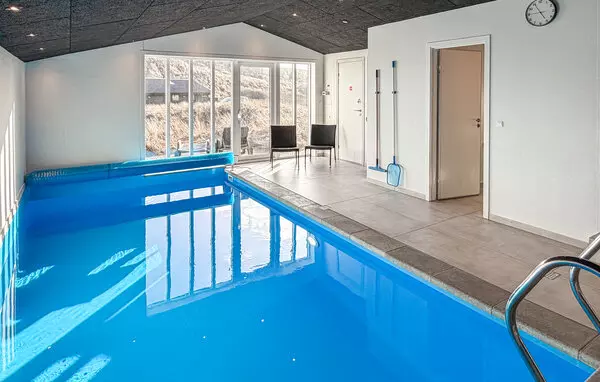

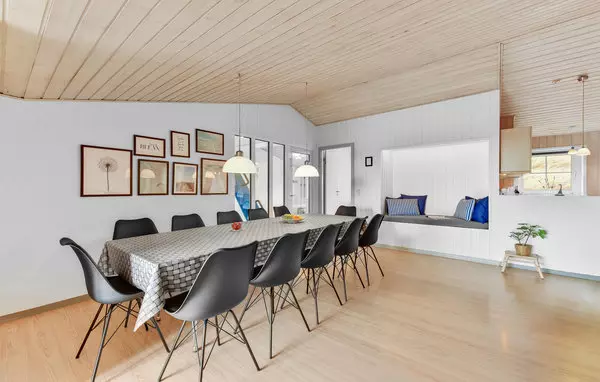
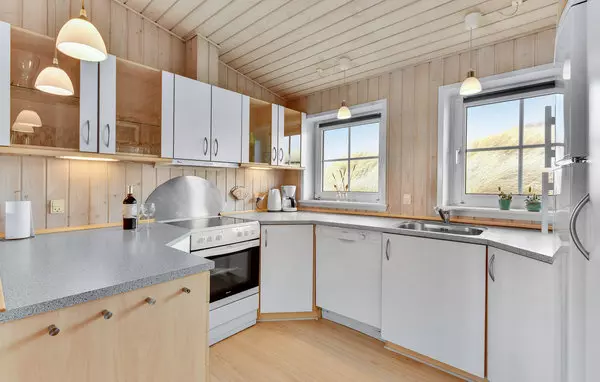

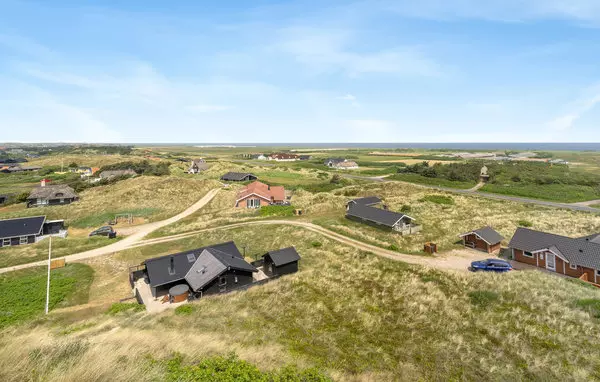
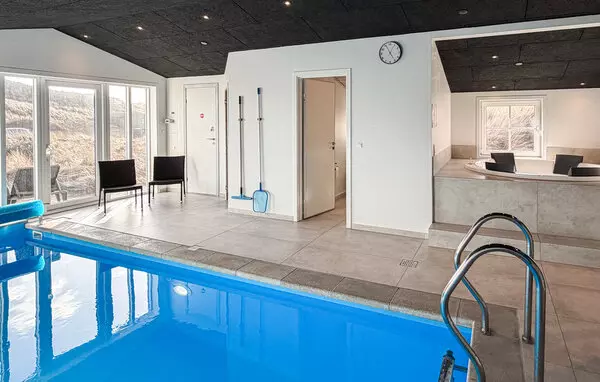
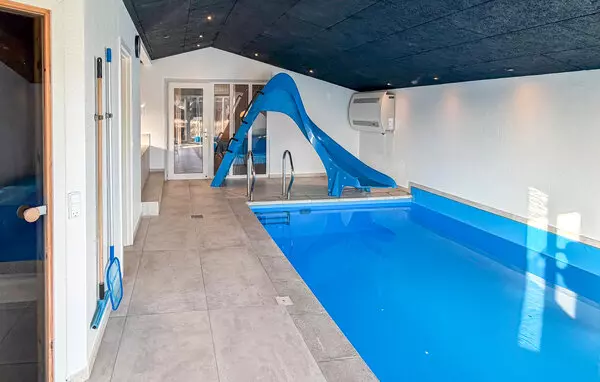
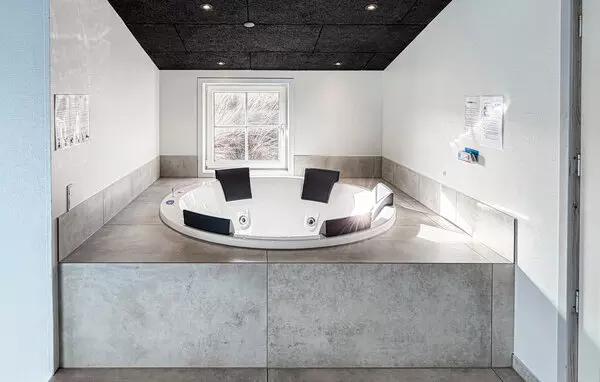
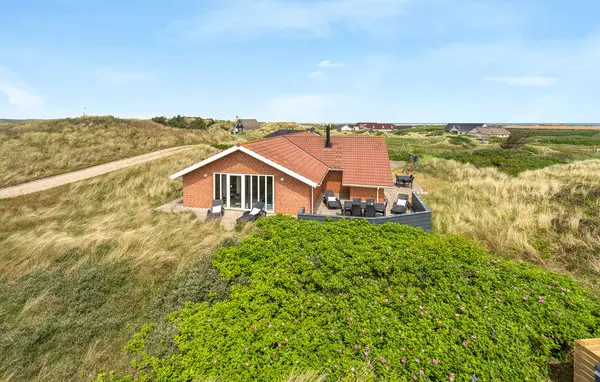
About Argab. This spacious stone holiday home sits on a gently sloping dune plot and sleeps up to 12. The dining room overlooks a pool with slide and counter-current, with fjord views beyond. A cosy alcove in the living area is ideal for reading, whilst the sauna offers welcome warmth after walks. Close to Argab beach at Holmsland Klit's narrowest point, you can swim in summer or stroll the roaring North Sea shore in winter. Surfing spots and sandy beach are within walking distance, with dune trails leading straight from the door. A memorable family holiday awaits.
Nearby attractions. Marked trail (0-5 km): 20 m
Marked trail (5-10 km): 20 m
Marked trail (10+ km): 20 m
Mountain bike trails (0-5 km): 20 m
Marked cycling trail (0-5 km): 20 m
Marked cycling trail (5-10 km): 20 m
Marked cycling trail (10+ km): 20 m
Jogging/fitness track: 20 m
Dog-friendly beach: 300 m
Dog-friendly forest: 600 m
Fishing: 400 m
Shops: 1500 m
Restaurant: 1500 m
Hvide Sande: 4000 m
Sandy beach: 200 m
Pet food shop: 5000 m
Vet: 4500 m
About West Jutland
My mishap arrived precisely three kilometres from the Argab, at a junction that looked identical to every other junction I had passed for the previous hour. I pulled over to check the directions, stepped out onto what I assumed was firm ground, and sank immediately into a drainage ditch up to my left knee. The water was spectacularly cold, the mud had ambitions of reaching my thigh, and a woman on a passing bicycle stopped specifically to laugh at me before offering help. This was my introduction to Jutlandic hospitality, and I rather loved her for it. I arrived at the Argab limping slightly, one shoe making an ominous squelching sound, and was met at the door by Bent, the property manager, who took one look at me and said, "Ah, the English. Always finding the water." He said this with genuine warmth, as though I had performed a traditional greeting. Bent is seventy-three, built like a tugboat, and communicates primarily in statements that sound like riddles but turn out to be literally true. He showed me the wood-burning stove, explained that the nearest shop was "where it always was," and left me with a bag of potatoes from his own garden and the strong impression that I had been adopted. The Argab itself is one of those traditional West Jutland farm conversions that manages to be both enormous and deeply cosy, with thick walls that make you feel pleasantly entombed and windows that frame the flat landscape like a painting of slightly melancholy beauty. I stood in the kitchen, dripping gently onto the flagstones, and watched the light do that particular Scandinavian thing where it hangs around for hours without actually committing to being daylight. My second local encounter came that evening, when I walked to the village pub in Ringkobing, still in my one dry shoe, and found myself seated next to a man called Knud who was drinking something clear and suspicious and eating pickled herring with his fingers. Knud spoke English with the fluency of someone who had learned it exclusively from American crime dramas, which made our conversation about crop rotation sound faintly threatening. He told me about the sand drift problems in the area, how whole farms had disappeared in the eighteenth century, and I found myself nodding along as though this were a perfectly normal topic for a Tuesday evening. "The sand comes when it wants," he said, with the resignation of a man who had made peace with fundamental forces. The barmaid, whose name I never learned but whose disapproving expressions spoke volumes, kept refilling my glass with something she described as "beer for thinking" and charged me progressively less for. By my third, I was convinced I understood Danish politics, which Knud found hilarious. I woke the next morning to the sound of wind and the realisation that I had hung my muddy trousers over the balcony to dry and they had frozen solid. Bent appeared at nine precisely, nodded at the trousers without comment, and invited me to help him check his lobster pots. I do not know why I said yes. I do not like boats, I do not like early mornings, and I particularly do not like the North Sea in March, which has the colour and approximate warmth of a disappointed sigh. The boat was small, the waves were enthusiastic, and Bent talked continuously about his late wife's skill with pastry while hauling pots with the mechanical efficiency of a man who had done this ten thousand times before. The lobsters, when they came, were uncooperative and magnificent. Bent showed me how to hold them, how they would try to reach back and pinch you if you gave them the opportunity, and I thought suddenly about my own capacity for reaching backward, for the little defensive pinches I gave the world when it held me uncertainly. We caught nine lobsters, six of which Bent declared "too polite" and threw back. The polite ones, he explained, were the small ones who didn't fight properly. Only the rude lobsters were worth eating. This seemed to me to contain a philosophy I was not yet prepared to examine. Back on shore, he gave me two of the rude ones and instructions for cooking them that involved more butter than I thought decent. I walked back to the Argab through lanes where the hedgerows leaned away from the sea wind, past houses that sat low to the ground like animals bracing against weather, and I understood something about why people stayed in places this exposed, this particular. That evening I ate lobster at the kitchen table, cooked in more butter than was decent, and watched the darkness arrive with the slow reluctance of someone who knows they are not welcome. The stove crackled. The wind did its endless work against the walls. Somewhere, I suspected, Bent was drinking something clear and suspicious, and Knud was explaining crop rotation to another visitor who had not asked. I thought about my muddy shoe, still drying by the door, and the woman on the bicycle who had laughed at me before helping. There is something in the Jutlandic character that I recognise without fully understanding, some combination of directness and warmth that does not bother with preamble, that meets you with your own ridiculousness already acknowledged and therefore already forgiven. The potatoes from Bent's garden were the best I have ever tasted, which I told him the next morning when he appeared with more, and eggs this time, and the information that the shop was "still where it was." I did not ask for clarification. I was learning that some things in West Jutland are simply known, or not known, and that the distinction rarely matters as much as you think. I stayed a week. I spoke with a woman at the Ringkobing museum who explained the history of local shipwrecks with such melancholy enthusiasm that I bought three books I cannot read. I helped a teenage boy push his tractor out of a field, an experience that left me with a bruised shoulder and a sudden understanding of why Jutlandic youth might develop certain stoic tendencies. I ate more pickled herring than I thought possible, then slightly more than that. The Argab became familiar in that way that places do when you stop trying to make them into something else, when you accept the creak of the floorboard by the bathroom and the particular way the shower temperature requires negotiation and the view of flat land that initially seems like absence but slowly reveals itself as presence, as a kind of earned openness. On my final morning, Bent arrived with a jar of something dark and honeyed, pressed it into my hands without explanation, and stood watching as I packed the car. The woman on the bicycle passed, waved, did not stop. I suspect she knew I was leaving and saw no reason to prolong the acquaintance. I appreciated this. I drove away through the same flat landscape, past the same junction where I had found the drainage ditch, and I did not stop this time, though I looked. The satnav directed me back toward Billund, toward the airport, toward the life I had left temporarily behind. The jar Bent gave me turned out to be homemade schnapps, which I discovered later, which I am still discovering, which will last longer than the memories perhaps, though I hope not. I think sometimes about the rude lobsters, about the sand that comes when it wants, about the particular quality of light that hangs around without committing. I think about the way Bent said "the English" as though it were a condition he had learned to accommodate with fondness and mild despair. I think about my frozen trousers on the balcony and the sound of wind against thick walls. The thing about West Jutland is that it does not perform for you. It simply is, with all its flatness and wind and people who laugh before they help, who give you potatoes without expectation, who throw back the polite lobsters because fighting matters. I arrived soaked and ridiculous and slightly lost, and I left with honeyed schnapps and the strange sense that I had been, for a brief week, usefully present in a place that asked nothing more than that. |
| Home - Articles - About - Contact |
| Our Destinations: Austria - Belgium - Croatia - Cyprus - Denmark - France - Germany - Greece - Italy - Montenegro - Netherlands - Norway - Poland - Portugal - Slovenia - Spain - Sweden |
| © 2026 UK Cottages is part of Exclusive Travel Group Ltd™. Reg Nu 16861677 |


 6.
6.  1.
1.