
Go Back

Go Back |
|
Austria Luxury holiday properties in and around Styria |
Stainz. Styria. Austria From £loading... for 7 nights |
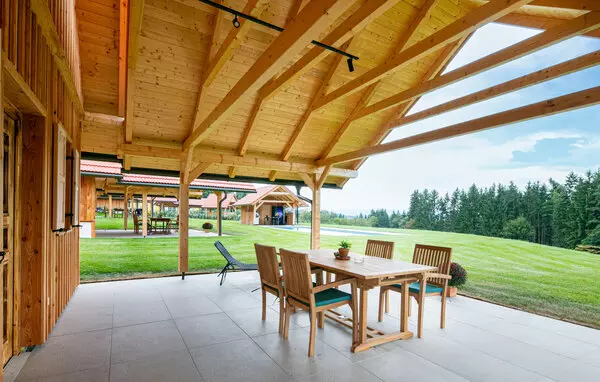


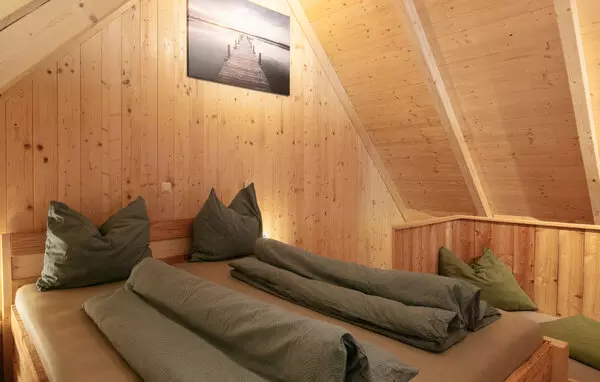


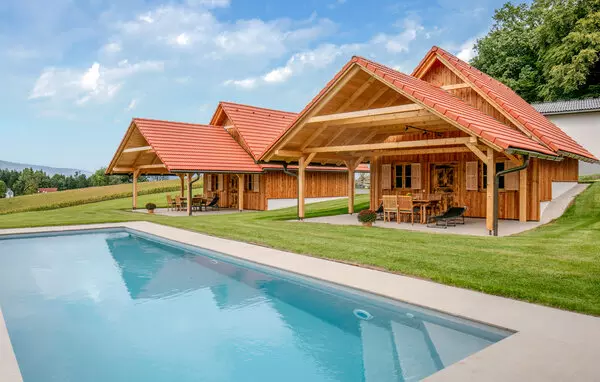
About Stainz. Enjoy a relaxing break in this cosy holiday home with shared pool. Rustic charm meets modern comfort, with light wood, a rustic dining table and functional kitchen creating a warm atmosphere for cooking, streaming films or simply unwinding. Take a dip in the communal pool, play water polo or swim a few lengths. Relax on the terrace with coffee and a book, or fire up the communal barbecue for evening meals with wine. Explore the gentle hills of the Styrian Wine Route, stroll through sunny vineyards, and discover Deutschlandsberg's imposing castle, charming alleyways and atmospheric pubs. In winter, try skiing, cross-country skiing or snowshoe hiking through the snow-covered landscape.
Nearby attractions. Golf course: 9700 m
Marked hiking trails: 12600 m
Tennis court: 3700 m
Playground: 3300 m
Horse hire: 7200 m
Thermal bath: 33000 m
Airport (GRZ): 25600 m
Shops: 2800 m
Restaurant: 1600 m
Deutschlandsberg: 10100 m
Ski lift: 21700 m
Skigebiet Koralpe: 77100 m
Open-air swimming pool: 33000 m
About Styria
The actual property sat twenty metres further on, looking considerably more welcoming than I felt. A traditional Styrian farmhouse, whitewashed with dark wooden beams, the sort that makes you immediately conscious of your own urban uselessness. I had barely killed the engine when a woman appeared from the neighbouring garden, wiping her hands on an apron and watching us with the patient amusement of someone who has seen this exact scene play out many times before. "American?" she called out, which I have decided to take as a comment on my driving rather than my accent. "British," I replied, already feeling the need to apologise for something. She nodded slowly, as if this explained the cabbage field. "I am Greta. I bring you bread tomorrow. You will need it." This was not a question. She turned and walked back to her garden without another word, leaving me to unpack the car with the certain knowledge that I had just been adopted by a stranger. The key was where the owner had promised, under a terracotta pot shaped like a chicken. My partner found this charming. I found it stressful, having spent ten minutes trying the lock with what turned out to be the key to our shed in Croydon, which I had inexplicably packed. The door opened onto a kitchen that smelled of wood polish and something faintly herbal, and I stood there feeling like an impostor in a postcard. We had barely located the kettle when there was a knock at the window. A man stood outside, perhaps seventy, holding a bottle and looking expectant. I opened the door to find him already halfway through introducing himself as Manfred, Greta's husband, though "husband" was delivered with a gesture toward the neighbouring house that suggested the arrangement was more theoretical than legal. He pressed the bottle into my hand. "Pumpkin seed oil," he said. "You will not have good oil in England. This is Styrian. You put on salad. Not too much, you are not drowning it." He laughed at his own joke, a sharp bark, then peered past me into the kitchen. "You have found the chicken pot," he observed. "Good. Many people do not find the chicken pot. They stand outside, very stupid, phoning people." I chose not to mention the shed key. Manfred stayed for twenty minutes, delivering a monologue about the region that required no response beyond occasional nodding. I learned that the local schnapps was not for tourists, that the hiking trail behind the house had claimed a German ankle the previous summer, and that Greta had opinions about British cooking that I should not take personally. "She watches the television," he said, with the resigned tone of a man describing a natural disaster. "The baking one. She thinks you all cry about cakes." When he finally left, promising to return with "proper information" about something he refused to specify, my partner turned to me with the expression of someone who had just witnessed a minor miracle. "We don't know anyone at home," she said, which was true. We had lived in our flat for four years and could not reliably name the people across the hall. Here, we had been in residence for eleven minutes and already had a bread schedule, an oil critique, and a standing appointment with a man who had strong feelings about German hiking boots. I poured us both the wine we had bought at the airport, which Manfred had glanced at with visible pity, and we sat at the kitchen table as the light faded over the hills. Somewhere, a cowbell clanked with the rhythm of a creature that had somewhere to be. I thought about Greta, already planning our carbohydrate intake without consultation. I thought about Manfred, who had appeared at our window like a folkloric obligation. I thought about the cabbage field, which now seemed less like a mistake and more like an introduction. The bread arrived at seven the next morning, still warm, carried by Greta in a dressing gown that suggested she had been up for hours doing meaningful things. She accepted coffee, rejected our offer of sugar with a look of profound disappointment, and told us about her sister in Klagenfurt who had married a man who collected spoons. "Not useful spoons," she clarified. "Decorative. From places. You understand, this is a sickness." She left with our empty coffee cups, promising to return with "the good jam," and I realised that I had not thought about work, or traffic, or the various minor anxieties that usually colonise my mornings, for nearly twenty-four hours. Manfred appeared that evening with a map hand-drawn on the back of a feed receipt, marking what he described as "the acceptable pub" and "the unacceptable pub, where they play the music." He stayed for an hour, declining all offers of drink, simply sitting with us on the terrace as the bats emerged and the hills turned purple. He spoke mostly about his son, who worked in Vienna and had, in Manfred's estimation, forgotten how to be quiet. "Always moving," he said. "Always the phone. You cannot hear the cowbells with the phone." He looked at me with sudden intensity. "You have the phone?" "Sometimes," I admitted. "Put it in the chicken pot," he advised, and I honestly could not tell if this was metaphorical. By the third day, we had a routine. Greta brought bread and judgments. Manfred brought information and unsolicited reviews of our life choices. A woman called Hilda, who I never fully established as a relative or simply a committed neighbour, appeared on the second afternoon to explain that the garden herbs were "for using, not for looking at, what are you, decorations?" and demonstrated proper harvesting technique with the authority of someone who had never once doubted her place in the world. I found myself telling Greta about my mother, who also made bread, though Greta's expression suggested she considered this claim charitable. I found myself showing Manfred photographs of our flat, which he surveyed with the careful neutrality of a diplomat. I found myself, on the fourth evening, genuinely arguing with Hilda about the correct method for preparing elderflower cordial, despite having never prepared elderflower cordial in my life. On our final morning, Greta brought extra bread without comment. Manfred produced a small bottle of the schnapps he had previously described as not for tourists, pressing it into my hand with the instruction to "save for something real, not Tuesday." Hilda appeared with a jar of the disputed cordial, which she placed on the counter with the air of someone settling a bet. None of them stayed long. There was, I realised, a Styrian rhythm to these things, an understanding that attachment need not be prolonged to be genuine. We packed the car in silence, the chicken pot returned to its duty. I drove past the cabbage field without incident, though I did slow down, almost hoping to see something I had missed. At the junction to the main road, my partner reached over and took my hand, which she does only when she has something true to say. "We should miss the turning more often," she said. I thought about Greta, who had fed us without permission. I thought about Manfred, who had appeared at windows and delivered opinions like weather. I thought about Hilda, who had treated our incompetence as a temporary condition rather than a permanent character flaw. I thought about the schnapps in my bag, waiting for something real. "I already do," I said, and turned toward Graz with the certain knowledge that I would take the wrong road again, deliberately, the next time. |
| Home - Articles - About - Contact |
| Our Destinations: Austria - Belgium - Croatia - Cyprus - Denmark - France - Germany - Greece - Italy - Montenegro - Netherlands - Norway - Poland - Portugal - Slovenia - Spain - Sweden |
| © 2026 UK Cottages is part of Exclusive Travel Group Ltd™. Reg Nu 16861677 |


 1.
1.  1.
1.