

What to Experience on a Holiday in Greece
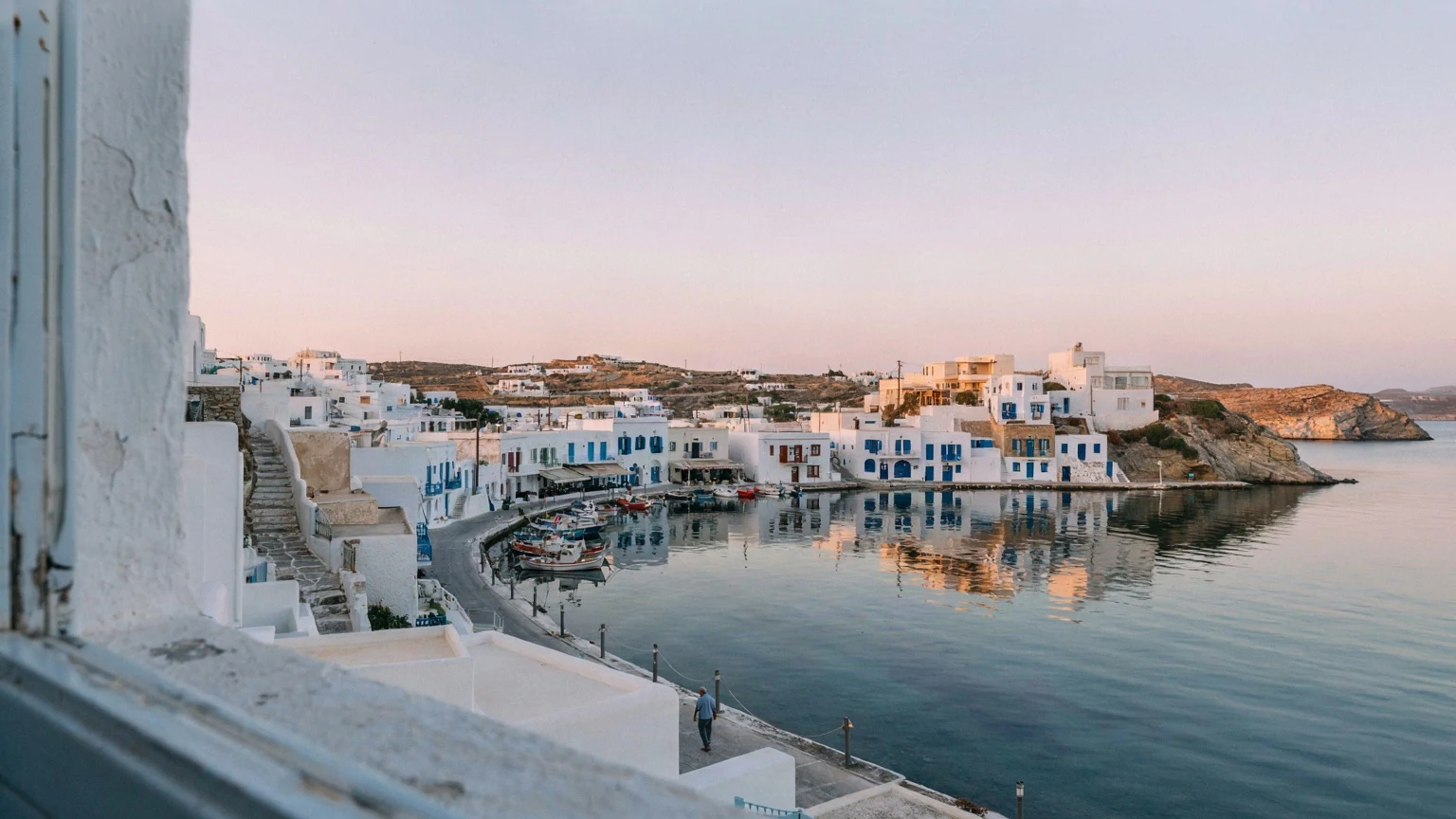
You arrive at the small harbour on the south coast of Milos in the late afternoon, when the meltemi has dropped and the fishing caiques are coming in with their engines throttled down, and the first thing you notice is how the water has gone the colour of flat, polished tin. The ferry from Piraeus took just over five hours. There's a taverna forty metres from where you're standing, its chairs stacked, and someone is hosing down the pavement in front of it. This is the rhythm you'll settle into within two or three days: mornings for movement, afternoons for the water, evenings for a table outside. What to experience on a holiday in Greece depends a good deal on which island you choose, but the pattern of the days holds wherever you land.
Choosing your island without overthinking it
Greece has around 6,000 islands and islets, of which roughly 230 are inhabited. You don't need to see them all, and trying to will spoil the trip. A useful rule: pick one island for the first week and one for the second, with a ferry connection of under four hours between them. The Cyclades are the obvious choice for a first visit, and there are good reasons for that. Naxos gives you both mountains and long beaches; Sifnos has a walking trail network that links villages across the interior; Milos has the geology, all those ribs of white and ochre rock that look almost volcanic because they are.
If you want quieter water, look at the Ionian. Lefkada is connected to the mainland by a causeway, so you can drive there without a ferry at all. Kefalonia's roads climb steeply from the coast and the drive down to Assos takes about half an hour. Crete is a country in itself, and one week there is not enough. I'd give it ten days minimum if you're going to drive from Chania to the far east.
Book ferries early for July and August. The fast catamarans sell out, and the slow conventional boats take twice as long but have open decks at the stern where you can sit with a coffee. I'd take the slow boat given the choice. The seats inside are more comfortable than you'd expect, and there's usually a plug socket near the bar.
What to experience on a holiday in Greece: the mornings
Get up before the heat does. Between seven and ten the light is at its best, the streets are being swept, and the bakeries are pulling trays of spanakopita out of the oven. Buy one, still hot, in a paper bag, and eat it standing up. It'll cost you about two euros. You'll want a second one and you should have it.
Swimming early is a different activity from swimming at noon. The water holds the cold of the night, the beach is empty apart from a few locals doing lengths parallel to the shore, and you can hear the pebbles shift under each wave. On the sand beaches of the west coast, the shelving is gentle enough for children; on the pebble beaches of the east, you'll want the rubber shoes that cost four euros from any minimarket. Buy them. You'll use them more than you think.
Walks are best finished by eleven. The path from Tholaria down to Aegiali on Amorgos takes about ninety minutes and passes through terraces of abandoned olives before dropping to the port. Take a litre of water each. Take two in June. There's a spring about halfway, but whether it's running depends on the winter rain, and I wouldn't count on it.
Village mornings have their own pace. In the smaller places, the kafeneio opens at six, the old men arrive by seven, and the backgammon boards come out soon after. Nobody minds if you sit at the next table with a Greek coffee, which arrives small, thick and with a glass of cold water on the side. Sit for an hour. It's free, and you'll see more of how the place works than any tour will show you.
Afternoons: water, boats and the long middle of the day
Between two and five, you should be in the sea, in the shade, or asleep. The Greeks do this and they've had a few thousand years to work it out. The heat at four in the afternoon in August is a physical weight on your shoulders. Don't fight it.
Boat trips are worth the money, but choose carefully. The big glass-bottomed tour boats that leave from the main ports are fine if you have small children and want a shaded seat. For anything else, find a small operator running a wooden caique with twelve to sixteen passengers. On Milos, the run around the north coast to Kleftiko takes a full day and stops two or three times for swimming in water so clear you can count the stones on the bottom at eight metres. On Zakynthos, the turtle-spotting boats leave from Laganas in the early morning, and if you go with one of the smaller licensed operators, the crew will cut the engine when a loggerhead surfaces.
You might also hire a small motorboat yourself, no licence required for engines under 30 horsepower in most places. Take a picnic, a flask of iced tea, and a map of the coast that the hire firm will mark up for you with the good anchorages and the places where the swell gets in. Half the best swimming on Ios, Alonnisos and the little satellite islets is unreachable on foot, and a boat puts all of it within reach.
Don't schedule anything for the hours between lunch and five. It sounds lazy and it isn't. It's how you get through the heat with energy left for the evening, which is when Greece is at its most generous.
Evenings, tables and the correct way to order
The evening meal starts late. In tourist-heavy places you can eat at seven; in village tavernas, the kitchen doesn't really get going until nine. Turn up at half eight, order a few things to share, and add more as the evening goes on. The menu will have a section headed mezedes and you should live in it: tzatziki, taramasalata, grilled octopus, a plate of small fried fish, fava with capers, and whatever the owner's wife has made that morning, which is often the thing to have.
Fish is priced by the kilo and it's worth asking the price before you order. The waiter will bring the fish to the table to look at, and you point at the one you want. This is normal. It's also where the bill can surprise you, so it's perfectly acceptable to ask what a whole sea bream will cost before it hits the grill. Nobody will think less of you for it.
Drink what's local. The house white in a carafe is usually cold, cheap and perfectly good, and the assyrtiko from Santorini is worth paying extra for once. In Crete, ask for raki after the meal, which will arrive whether you asked or not, in a small glass, alongside a plate of fruit. Sit with it. The last hour of the evening is the part you'll remember when you're back at work in November.
Greece rewards slowness. The people who enjoy it most aren't seeing more; they're moving less.
Two or three things worth going out of your way for
The archaeological sites, early. The Acropolis opens at eight and by half nine in July the queue on the south slope is 200 metres long. Go at eight. The same applies at Knossos, at Delphi and at Mycenae. At Delphi, the site sits on a slope above a valley of olives and the light at opening time comes up from behind the temple of Athena. Allow three hours, and take the museum afterwards when the sun is at its worst.
The villages in the interior. Most visitors never leave the coast, which is a shame, because the mountain villages keep their own hours. On Naxos, the road up through Halki and Apiranthos passes through a landscape of terraced olives and whitewashed dovecotes. On Crete, the Amari valley is a bowl of walnut trees and small churches with frescoes inside that nobody locks. Drive slowly. The road edges are unfenced.
A monastery or a feast day. If your dates coincide with a panigyri, the local saint's day, go. There'll be food, a table set up in the square, a band playing the lyra and laouto until two in the morning, and an atmosphere that no restaurant booking will replicate. Ask at your accommodation; the dates vary by village and someone will know one within a twenty-minute drive.
Practical notes that make the rest easier
Cash is still useful. Plenty of tavernas take cards now, but the smaller ones, and the kiosks, and the boatmen, often don't. Draw from an ATM at a bank branch rather than a standalone machine, and take out larger amounts less frequently to keep the fees down.
Driving is straightforward outside the main towns. Roads on the coast are wide and well surfaced; the mountain roads are narrower than you'd like, with hairpins and the occasional goat, and the speed you manage on them will be slower than the map suggests. Fill up before you head inland. Petrol stations thin out quickly once you leave the coast road.
Learn six words of Greek. Kalimera in the morning, efharisto for thank you, parakalo for please, and yassas as a general greeting. It's not required and the reply will often come back in English, but it changes the tone of a conversation. The Greeks are generous with people who make the effort, and a badly pronounced efharisto will still get you a smile.
Bring a hat, a refillable water bottle and shoes you can walk in on stone. Bring fewer clothes than you think. Every island has a laundry, and the light there dries a shirt in an hour on a line.
The last few days
By the second week you'll have stopped checking the time. The days settle into a shape: a swim before breakfast, a walk or a drive, lunch at two, a sleep, and then the long, slow evening. This is the actual thing you come for. Not the sites, though they're extraordinary, and not the beaches, though some of them are among the best in Europe. It's the pace. Nobody looks twice at a Sunday lunch that runs to five o'clock.
Keep the last day clear. No ferries to catch, no site to see before the flight. Buy a paper, sit somewhere with a view of the water, and order a second coffee you don't need. It's the best few hours of the trip, and the cheapest.
On the way to the airport, the taxi driver will probably ask where you're from and tell you his cousin lives there. Let him. The conversation is part of the holiday, and it's the last one you'll have before the departure gate.
Further reading: Greek islands on Wikipedia.