

Exploring Holiday in Croatia: A Practical Guide
You get off the ferry at Split around nine in the morning with about forty kuna in coins, a wheeled suitcase that has lost one of its rubber feet, and the vague plan of finding coffee before anything else. The harbour is loud. Taxis are reversing, a man is shouting about luggage tags, and the smell is diesel and hot stone. If you've come for an exploring holiday in Croatia, this is roughly where that begins: not with a view, but with a queue.
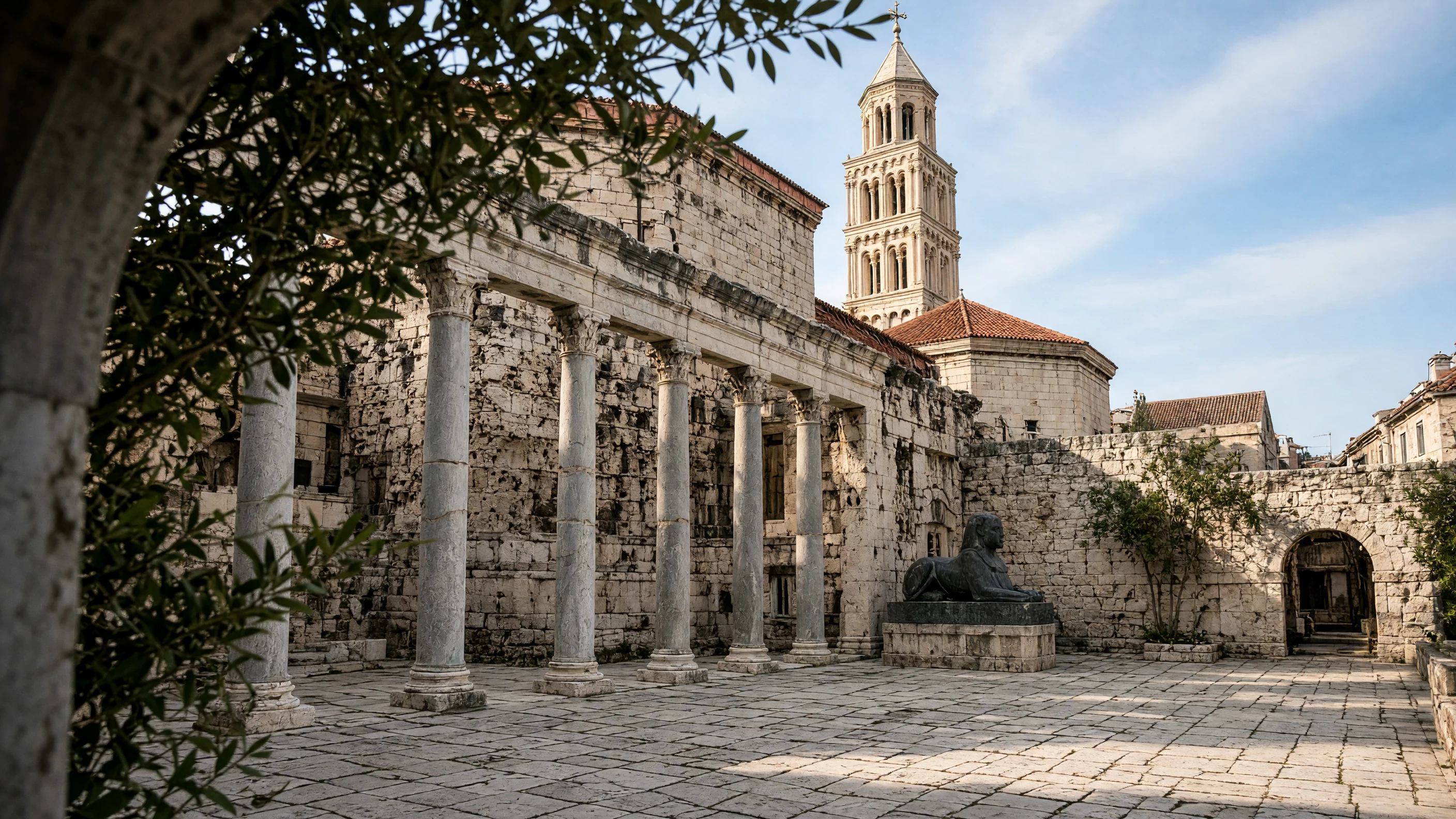
Split's old town is a Roman palace with a city grown through it. Diocletian built the thing at the turn of the fourth century, and people have been living in the walls ever since. What this means in practice is that you walk down a corridor that looks like a museum and pass a woman hanging washing above a bank machine. The peristyle, the colonnaded square in the middle, fills up with tour groups before ten. Go at half seven and you'll have it nearly to yourself, though the cafes won't be open and the only other people around are men sweeping.
Tickets for the cathedral bell tower cost 30 kuna when I last climbed it, or maybe 40. I didn't write it down. Either way it's cheap, and the stairs are open metal grilles, which is fine unless you dislike seeing the drop. The view from the top is the whole city and the sea and the islands beyond. Find the Riva seafront below you, Marjan hill to the west, the ferry port to the east. Spend a few minutes up there and the rest of your walking makes more sense.
Getting around without a car
You don't need to drive. Croatia's bus network is better than most visitors expect, and the coastal routes run often enough in summer that you can turn up and buy a ticket at the window. From Split to Trogir takes about half an hour and costs less than a sandwich. The bus station is next to the ferry terminal, which is convenient, and also a bit grim: no shade, a few cracked plastic seats, a timetable that changes without warning.
Ferries are the other backbone. Jadrolinija and the faster catamaran services cover most islands, but the schedules thin out badly outside July and August. Check the return times before you commit to a day trip, because a missed last boat can mean an unplanned night in a hotel that knows you have no choice. I've done it once, in October, on an island with two restaurants, and the hotel room had a smell I couldn't identify.
If you're going further north, the train from Split to Zagreb takes around six hours and is comfortable enough, though slow. Buses do the same run in about four and a half. Neither is scenic in the way people promise. The interior is scrub, rock and long stretches of nothing, and you'll be grateful for a book.
Island hopping as an exploring holiday in Croatia
Hvar gets the crowds and the prices, and it's easy to see why: the harbour is beautiful, the light is extraordinary, and the wine is genuinely good. It's also the place where a coffee on the seafront costs what a main course costs elsewhere. That's not a complaint exactly, more a budgeting fact. Walk fifteen minutes inland and the same coffee drops to a euro and a half.
Korčula is quieter and, for my money, more rewarding. The old town sits on a small peninsula with a tight grid of streets and a handful of decent bars. You can wander it in an hour, then spend the rest of the day swimming off the rocks on the eastern side. There's a mass of pebbly beach near the harbour where families go, and a stretch of flat rock further round where people lay towels and jump in. No sand anywhere. Bring shoes you don't mind getting wet, because the pebbles hurt.
Vis is the one that feels furthest away, and it is: two and a half hours by catamaran from Split, longer by car ferry. The island is small, about 90 square kilometres, and the blue cave on Biševo requires a separate boat trip and, in high season, a long wait in a queue on the water. I didn't go. The queue put me off, and I spent the morning eating pastries in Komiža instead, which was the right call for me and probably the wrong one for anyone who has come a long way.
That's the trade-off worth knowing about: the famous sights cost you hours of standing about. Croatia's coast is dense with things you're told not to miss, and some of them are genuinely worth the wait. Others aren't. You'll make better decisions if you accept that you can't do all of it and pick two or three anchors per week rather than five.
What it costs, honestly
Prices have climbed since the country adopted the euro in 2023, and the difference between the coast and the interior is stark. A simple lunch of grilled fish, bread and a glass of house white will set you back somewhere between 15 and 25 euros on the islands. Inland, in Slavonia or the Zagorje hills, the same money buys a much bigger meal. Accommodation follows the same pattern. A modest double room with a sea view in July costs three times what the identical room costs in a hill village fifty kilometres inland.
Some things are cheaper than you'd think. Local wine is excellent value: a decent bottle of Plavac Mali from a small producer runs about 8 to 12 euros in a shop. Burek, the flaky pastry with meat or cheese, costs a couple of euros from a bakery and makes a proper breakfast. Markets sell tomatoes, figs and peaches in August at prices that would embarrass a British supermarket.
Other things sting. Parking in Split or Dubrovnik is expensive and scarce, and a day's worth can run to 20 euros or more. Sun loungers on organised beaches charge by the day. Ferries charge extra for a car in summer, and the surcharge for a vehicle isn't small. If you're travelling on a budget, pick a base, stay put, and use buses to make day trips.
Food, and the rhythm of a day
Croatian eating runs on a different clock from British eating. Lunch is the main meal, often taken late, and dinner is lighter and later still. Restaurants that serve proper lunch may shut between three and six and reopen for the evening with a different menu. You'll get caught out by this at least once. Plan around it or you'll end up eating a supermarket sandwich on a bench.
The food itself depends entirely on where you are. On the coast it's fish, shellfish, olive oil, blitva (chard and potato), and grilled meat for the people who don't like fish. Inland it turns to pork, paprika, dumplings and stews, and it's heavier and better suited to cold weather. Black risotto, made with cuttlefish ink, is the dish visitors order most and locals order least, but it's good when it's made properly: dark, salty, and not too rich.
Coffee culture is serious. You sit. You don't take away. A small espresso costs about 1.50 euros and you're expected to drink it at a table, possibly for an hour. Nobody hurries you. This took me a while to get used to, and now I miss it at home.
One warning: service in August is stretched. Waiters are working double shifts, kitchens get slammed, and a meal that takes an hour in June can take two and a half in peak season. It's not personal. Eat earlier or later, and bring patience.
Swimming is the other fixed point of the day. Most people swim in the late afternoon, after the worst heat, and the beaches fill between five and seven. It's the best time anyway. The water's warm, the light's long, and the crowds thin out by eight.
Practical things nobody mentions
Cash still matters in smaller places. Some konobas, the traditional taverns, take cards, but plenty don't, especially on the smaller islands. Carry a few hundred kuna or euros in notes and don't assume a card will work. The same goes for markets and small bakeries.
The bura wind is real. When it blows, usually in winter but sometimes out of season, it's cold, gusty, and it makes the sea choppy enough that ferries get cancelled. If you're travelling in spring or autumn, build a spare day into any island plan. I've lost a whole afternoon to a cancelled catamaran, sitting in a cafe near the port with a book and a coffee, which wasn't the worst way to spend it.
Shoes matter more than you'd think. Cobbles in the old towns are polished by centuries of feet and slippery when wet. Bring something with grip. Bring plasters too, because the first day always involves more walking than you planned.
On the language: English is widely spoken, especially among younger people and anyone working in tourism. A few words of Croatian go a long way, but nobody expects them. Hvala (thank you) and dobar dan (good day) will cover most situations.
And on timing: July and August are hot, busy and expensive. June and September are better by every measure except sea temperature. May and October are quieter still, with the trade-off that some restaurants and ferries shut. There's no perfect month. There's only the month that suits what you want to do.
One last thing about the exploring part. The temptation is to treat Croatia as a checklist: Dubrovnik, Split, Hvar, Plitvice, done. The country rewards the opposite approach. Stay four nights in one place, learn the bakery, find the swimming spot, notice which bar the locals use. That's where the trip actually happens, on the second and third day of a place, when you stop reading the map and start walking by instinct.
The first evening in a new town, I always walk the same loop: down to the water, along the front, back through the oldest streets. It's never interesting, and it always helps. By the time you sit down for dinner you know which way the sea is.
Someone on the ferry back had a dog in a canvas bag, and the dog slept the whole crossing.
Further reading: Split, Croatia on Wikipedia.